AI Art Kingdom

AI Art Kingdom — independent reviews, comparisons, pricing and step-by-step guides on Aizhi.

  • Example-based machine translation

    Example-based machine translation

    Example-based machine translation (EBMT) is a method of machine translation often characterized by its use of a bilingual corpus with parallel texts as its main knowledge base at run-time. It is essentially a translation by analogy and can be viewed as an implementation of a case-based reasoning approach to machine learning. == Translation by analogy == At the foundation of example-based machine translation is the idea of translation by analogy. When applied to the process of human translation, the idea that translation takes place by analogy is a rejection of the idea that people translate sentences by doing deep linguistic analysis. Instead, it is founded on the belief that people translate by first decomposing a sentence into certain phrases, then by translating these phrases, and finally by properly composing these fragments into one long sentence. Phrasal translations are translated by analogy to previous translations. The principle of translation by analogy is encoded to example-based machine translation through the example translations that are used to train such a system. Other approaches to machine translation, including statistical machine translation, also use bilingual corpora to learn the process of translation. == History == Example-based machine translation was first suggested by Makoto Nagao in 1984. He pointed out that it is especially adapted to translation between two totally different languages, such as English and Japanese. In this case, one sentence can be translated into several well-structured sentences in another language, therefore, it is no use to do the deep linguistic analysis characteristic of rule-based machine translation. == Example == Example-based machine translation systems are trained from bilingual parallel corpora containing sentence pairs like the example shown in the table above. Sentence pairs contain sentences in one language with their translations into another. The particular example shows an example of a minimal pair, meaning that the sentences vary by just one element. These sentences make it simple to learn translations of portions of a sentence. For example, an example-based machine translation system would learn three units of translation from the above example: How much is that X ? corresponds to Ano X wa ikura desu ka. red umbrella corresponds to akai kasa small camera corresponds to chiisai kamera Composing these units can be used to produce novel translations in the future. For example, if we have been trained using some text containing the sentences: President Kennedy was shot dead during the parade. and The convict escaped on July 15th., then we could translate the sentence The convict was shot dead during the parade. by substituting the appropriate parts of the sentences. == Phrasal verbs == Example-based machine translation is best suited for sub-language phenomena like phrasal verbs. Phrasal verbs have highly context-dependent meanings. They are common in English, where they comprise a verb followed by an adverb and/or a preposition, which are called the particle to the verb. Phrasal verbs produce specialized context-specific meanings that may not be derived from the meaning of the constituents. There is almost always an ambiguity during word-to-word translation from source to the target language. As an example, consider the phrasal verb "put on" and its Hindustani translation. It may be used in any of the following ways: Ram put on the lights. (Switched on) (Hindustani translation: Jalana) Ram put on a cap. (Wear) (Hindustani translation: Pahenna)

    Read more →
  • Danilo McGarry

    Danilo McGarry

    Danilo McGarry (born 1985) is a British tech executive, writer, and speaker who has led AI initiatives in finance and healthcare. == Early life and education == Danilo McGarry was born in 1985. He received a Bachelor of Science (BSc) with honors in Business Management from the University of Bath. == Career == McGarry began his career in technology and financial services, with positions at companies including Motorola, JPMorgan Chase, and BNP Paribas. He later joined the Royal Bank of Canada (RBC) as an analyst and later became a director, where he led transformation initiatives involving robotic process automation (RPA) in the bank's capital markets operations. McGarry subsequently moved into leadership roles focused on AI. At Citigroup, he served as Head of Artificial Intelligence and Machine Learning, where he launched an AI-driven robotics and automation initiative. At UnitedHealth Group (UHG), he held a senior role in the company's automation program, which utilized a large fleet of software robots in its healthcare operations. In December 2019, McGarry was appointed Global Head of AI & Automation at Alter Domus, a multinational financial services firm. In this role, he established a new AI and automation department. He left the firm in late 2023 to establish his businesses. In 2025, the Chartered Institute of Personnel and Development (CIPD) appointed him as its strategic adviser on artificial intelligence.

    Read more →
  • Project Maven

    Project Maven

    Project Maven (officially Algorithmic Warfare Cross Functional Team) is a United States Department of Defense initiative launched in 2017 to accelerate the adoption of machine learning and data integration across U.S. military intelligence workflows, specifically in intelligence, surveillance, target acquisition, and reconnaissance as well as in geospatial intelligence. It initially focused on applying computer vision for processing images and videos for intelligence purposes. Currently, the program operates under the National Geospatial-Intelligence Agency (NGA) and encompasses multiple applications across the Department of Defense spanning military operation targeting support, data integration and visualization for analysts, and training machine learning models on labeled datasets of military assets and infrastructure. It integrates data from drones, satellites, and other sensors to flag potential targets, present findings to human analysts, and relay their decisions to operational systems. The program originated under Deputy Secretary Robert O. Work after he raised concerns about China's advances in defense applications of artificial intelligence. Project leaders, Colonel Drew Cukor, USMC, and Lt. Gen. Jack Shanahan, framed the program as human-in-the-loop decision support inside the Department of Defense rather than as an autonomous weapons platform. Contractors supporting Maven have included Google, which withdrew in 2018 after internal protests, and follow-on integrators such as Palantir, Anduril, Amazon Web Services, and Anthropic (withdrew in 2026). The Pentagon credits Maven with providing 2024 targeting support for U.S. airstrikes in Iraq, Syria, and Yemen, along with locating hostile maritime assets in the Red Sea. == Administrative history == Initially, the effort was led by Robert O. Work who was concerned about China's military use of the emerging technology. Reportedly, Pentagon development stops short of acting as an AI weapons system capable of firing on self-designated targets. The project was established in a memo by the U.S. Deputy Secretary of Defense on 26 April 2017 proposing an "Algorithmic Warfare Cross-Functional Team". With the help of Defense Innovation Unit, the project obtained the support of top talents in AI outside of the traditional defense contracting base. It was initially funded for $70 million. Jack Shanahan was the director of the project during April 2017 to December 2018. At the second Defense One Tech Summit in July 2017, Cukor said that the investment in a "deliberate workflow process" was funded by the Department [of Defense] through its "rapid acquisition authorities" for about "the next 36 months". In the defense industry, the standard procedure for the military to acquire hardware is by way of research, development, test, and evaluation (RDT&E), followed by production and sustainment. In 2017, acquiring software was done in the same way as hardware. This created a problem, since software is constantly updated. Project Maven procured software using Broad Agency Announcements, a flexible contracting vehicle that categorized software as consistently RDT&E, allowing constant updating. Another issue was that the government usually acquired the intellectual property (IP) for procured software, and with the project, only parts of the IP of the software was acquired. Cukor used the principle of "platform IP belongs to the vendor, configurations on top are the customer's". For example, Palantir retained IP to their core platform, while the government obtained the IP to Maven-specific logic configured on top of it. According to US Air Force Lt. Gen. Jack Shanahan in November 2017, it is "designed to be that pilot project, that pathfinder, that spark that kindles the flame front of artificial intelligence across the rest of the [Defense] Department". Its chief, U.S. Marine Corps Col. Drew Cukor, said: "People and computers will work symbiotically to increase the ability of weapon systems to detect objects." Project Maven has been noted by allies, such as Australia's Ian Langford, for the ability to identify adversaries by harvesting data from sensors on UAVs and satellites. As of 2017 December, 150,000 images had been manually labelled to establish the first training data sets, and it was projected to reach one million by January 2018. Project Maven was funded for $221 million in fiscal 2020. In 2020, the House and Senate conferees on the National Defense Authorization Act for Fiscal Year 2021, agreed to the Senate's recommendation to fund the Pentagon's $250 million request for Project Maven. At the GEOINT Symposium of 2022, it was announced that Project Maven was transferred from the Office of the Under Secretary of Defense for Intelligence and Security to the NGA, under President Biden’s proposed budget for Fiscal Year 2023. It became a Program of Record on 2023 November 7. Frank "Trey" Whitworth, vice admiral, was the director of NGA from June 2022 to November 2025. Whitworth was initially skeptical of the program, suspecting it was incautious about the targeting principles, but later regarded it as "important work". As of 2024, the project is jointly administered by the NGA and the CDAO, and its director is Rachel Martin. Before 2025, Biden appointees within CDAO had held back AI development for safety and reliability concerns, though as of 2025, this has stopped. As of 2024, Maven provided the cloud infrastructure, software capabilities, and AI for CDAO's Combined Joint All-Domain Command and Control initiatives. As of summer 2025, there were eight Maven initiatives. Of these, five were in the NGA, including analyzing drone feeds and satellite imagery. On 18 September 2025, the UK government announced a new partnership with Palantir to develop AI-powered military capabilities for decision-making and targeting, identifying opportunities worth up to £750 million over five years. On 25 March 2025, the NATO Communications and Information Agency and Palantir finalized the acquisition of the Palantir Maven Smart System NATO (MSS NATO) for employment within NATO's Allied Command Operations. It was planned to be used within 30 days of acquisition. In a letter to Pentagon on 9 March 2026, Steve Feinberg stated that Project Maven will become an official program of record by September 2026, the close of the current fiscal year. The project would transfer from the NGA to the CDAO within 30 days. Future contracting with Palantir would be handled by the US Army. In 2026-03, it was announced that the US Army Combined Arms Command would integrate Maven into its training. == Technology == Project Maven uses machine learning algorithms to analyze and fuse vast amounts of surveillance data from multiple sources made possible through data integration using Palantir Technologies. The data sources include photographs, satellite imagery, geolocation data (IP address, geotag, metadata, etc) from communications intercepts, infrared sensors, synthetic-aperture radar, and more. The system is mainly used for assisting analysts in intelligence, surveillance, target acquisition, and reconnaissance. Machine learning systems, including object recognition systems, process the data and identify potential targets, such as enemy tanks or location of new military facility. The training dataset included at least 4 million images of military objects such as warships, labelled by humans. The user interface is called Maven Smart System. It could display information such as aircraft movements, logistics, locations of key personnel, locations on the no-strike list, ships, etc. Yellow-outlined boxes show potential targets. Blue-outlined boxes show friendly forces or no-strike zones. It could also transmit, directly to weapons, a human decision to fire weapons. Internal documentation referred to "Maven ATR: automatic target recognition". Initially the project focused on applications of computer vision. The project's leaders were particularly impressed by model performance on ImageNet. As of 2018, the purpose of the system was AI-enabled analysis of full-motion video. In 2022 it expanded to combatant commands under the AI and Data Acceleration Initiative. In 2022, it was reported that the project expanded to non-image data, including captured enemy material, maritime intelligence, and publicly available information. In 2024, it was stated that Maven's key technical contribution was data management: Maven standardizes heterogeneous data through an ontology layer so data can be fused, exchanged across cloud and edge systems, and used by multiple applications. The system was presented as a broader data-centric warfighting system that feeds apps for planning, preparing, and executing operations. In 2024, the Broad Area Surveillance-Targeting (BAS-T) is a part of Maven. The system detects objects in images and uses data fusion to produce a common operational picture containing "priority based, in-depth assessment of the enemy systems pre

    Read more →
  • Catholic Church and artificial intelligence

    Catholic Church and artificial intelligence

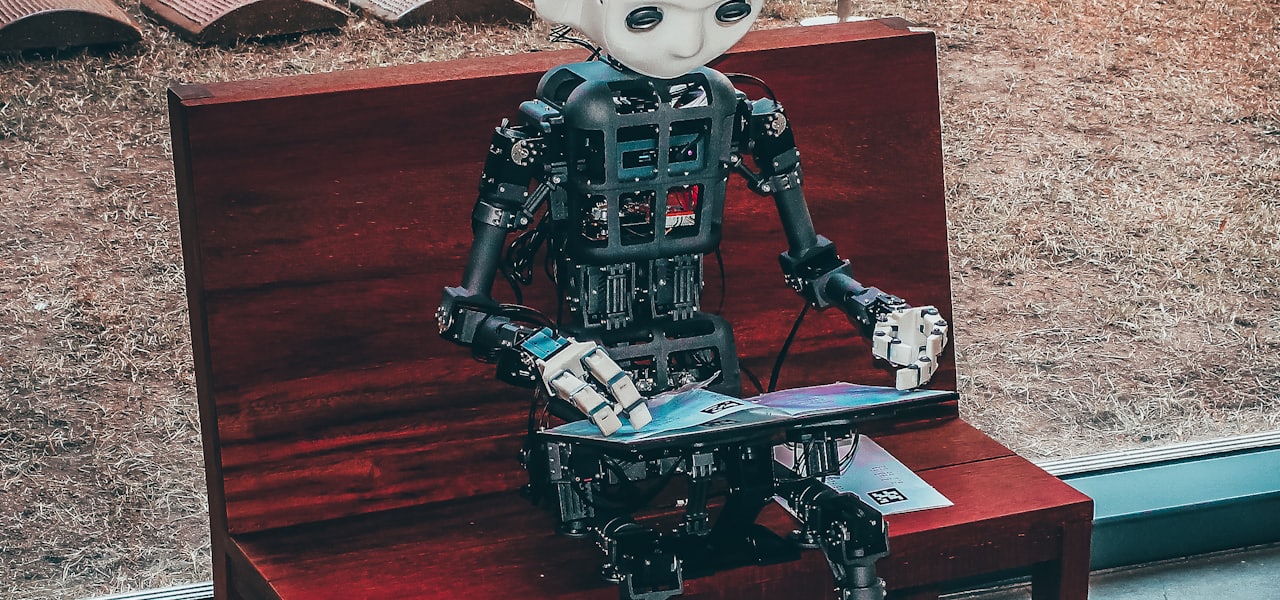
    The Catholic Church views artificial intelligence as a significant technological development that must be governed by strict ethical principles rooted in human dignity and the common good. In January 2025, the Church issued the doctrinal note Antiqua et nova co-issued by the Dicastery for the Doctrine of the Faith and the Dicastery for Culture and Education. It addresses the "relationship between artificial intelligence and human intelligence" and offers reflections on the "anthropological and ethical challenges raised by AI". In August 2025, Time magazine included Pope Leo XIV in its 2025 list of the World’s Most Influential People in Artificial Intelligence. In May 2026, Pope Leo XIV approved the creation of a new Vatican commission on artificial intelligence. He released his first papal encyclical, titled Magnifica humanitas, on the topic later in the month.

    Read more →
  • Confidential computing

    Confidential computing

    Confidential computing is a security and privacy-enhancing computational technique focused on protecting data in use. Confidential computing can be used in conjunction with storage and network encryption, which protect data at rest and data in transit respectively. It is designed to address software, protocol, cryptographic, and basic physical and supply-chain attacks, although some critics have demonstrated architectural and side-channel attacks effective against the technology. The technology protects data in use by performing computations in a hardware-based trusted execution environment (TEE). Confidential data is released to the TEE only once it is assessed to be trustworthy. Different types of confidential computing define the level of data isolation used, whether virtual machine, application, or function, and the technology can be deployed in on-premise data centers, edge locations, or the public cloud. It is often compared with other privacy-enhancing computational techniques such as fully homomorphic encryption, secure multi-party computation, and Trusted Computing. Confidential computing is promoted by the Confidential Computing Consortium (CCC) industry group, whose membership includes major providers of the technology. == Properties == Trusted execution environments (TEEs) "prevent unauthorized access or modification of applications and data while they are in use, thereby increasing the security level of organizations that manage sensitive and regulated data". Trusted execution environments can be instantiated on a computer's processing components such as a central processing unit (CPU) or a graphics processing unit (GPU). In their various implementations, TEEs can provide different levels of isolation including virtual machine, individual application, or compute functions. Typically, data in use in a computer's compute components and memory exists in a decrypted state and can be vulnerable to examination or tampering by unauthorized software or administrators. According to the CCC, confidential computing protects data in use through a minimum of three properties: Data confidentiality: "Unauthorized entities cannot view data while it is in use within the TEE". Data integrity: "Unauthorized entities cannot add, remove, or alter data while it is in use within the TEE". Code integrity: "Unauthorized entities cannot add, remove, or alter code executing in the TEE". In addition to trusted execution environments, remote cryptographic attestation is an essential part of confidential computing. The attestation process assesses the trustworthiness of a system and helps ensure that confidential data is released to a TEE only after it presents verifiable evidence that it is genuine and operating with an acceptable security posture. It allows the verifying party to assess the trustworthiness of a confidential computing environment through an "authentic, accurate, and timely report about the software and data state" of that environment. "Hardware-based attestation schemes rely on a trusted hardware component and associated firmware to execute attestation routines in a secure environment". Without attestation, a compromised system could deceive others into trusting it, claim it is running certain software in a TEE, and potentially compromise the confidentiality or integrity of the data being processed or the integrity of the trusted code. == Technical approaches == Technical approaches to confidential computing may vary in which software, infrastructure and administrator elements are allowed to access confidential data. The "trust boundary," which circumscribes a trusted computing base (TCB), defines which elements have the potential to access confidential data, whether they are acting benignly or maliciously. Confidential computing implementations enforce the defined trust boundary at a specific level of data isolation. The three main types of confidential computing are: Virtual machine isolation Application isolation, also known as process isolation Function isolation, also known as library isolation Virtual machine isolation removes the elements controlled by the computer infrastructure or cloud provider, but allows potential data access by elements inside a virtual machine running on the infrastructure. Application or process isolation permits data access only by authorized software applications or processes. Function or library isolation is designed to permit data access only by authorized subroutines or modules within a larger application, blocking access by any other system element, including unauthorized code in the larger application. == Threat model == As confidential computing is concerned with the protection of data in use, only certain threat models can be addressed by this technique. Other types of attacks are better addressed by other privacy-enhancing technologies. === In scope === The following threat vectors are generally considered in scope for confidential computing: Software attacks: including attacks on the host’s software and firmware. This may include the operating system, hypervisor, BIOS, other software and workloads. Protocol attacks: including "attacks on protocols associated with attestation as well as workload and data transport". This includes vulnerabilities in the "provisioning or placement of the workload" or data that could cause a compromise. Cryptographic attacks: including "vulnerabilities found in ciphers and algorithms due to a number of factors, including mathematical breakthroughs, availability of computing power and new computing approaches such as quantum computing". The CCC notes several caveats in this threat vector, including relative difficulty of upgrading cryptographic algorithms in hardware and recommendations that software and firmware be kept up-to-date. A multi-faceted, defense-in-depth strategy is recommended as a best practice. Basic physical attacks: including cold boot attacks, bus and cache snooping and plugging attack devices into an existing port, such as a PCI Express slot or USB port. Basic upstream supply-chain attacks: including attacks that would compromise TEEs through changes such as added debugging ports. The degree and mechanism of protection against these threats varies with specific confidential computing implementations. === Out of scope === Threats generally defined as out of scope for confidential computing include: Sophisticated physical attacks: including physical attacks that "require long-term and/or invasive access to hardware" such as chip scraping techniques and electron microscope probes. Upstream hardware supply-chain attacks: including attacks on the CPU manufacturing process, CPU supply chain in key injection/generation during manufacture. Attacks on components of a host system that are not directly providing the capabilities of the trusted execution environment are also generally out-of-scope. Availability attacks: confidential computing is designed to protect the confidentiality and integrity of protected data and code. It does not address availability attacks such as Denial of Service or Distributed Denial of Service attacks. == Use cases == Confidential computing can be deployed in the public cloud, on-premise data centers, or distributed "edge" locations, including network nodes, branch offices, industrial systems and others. === Data privacy and security === Confidential computing protects the confidentiality and integrity of data and code from the infrastructure provider, unauthorized or malicious software and system administrators, and other cloud tenants, which may be a concern for organizations seeking control over sensitive or regulated data. The additional security capabilities offered by confidential computing can help accelerate the transition of more sensitive workloads to the cloud or edge locations. === Multi-party analytics === Confidential computing can enable multiple parties to engage in joint analysis using confidential or regulated data inside a TEE while preserving privacy and regulatory compliance. In this case, all parties benefit from the shared analysis, but no party's sensitive data or confidential code is exposed to the other parties or system host. Examples include multiple healthcare organizations contributing data to medical research, or multiple banks collaborating to identify financial fraud or money laundering. Oxford University researchers proposed the alternative paradigm called "Confidential Remote Computing" (CRC), which supports confidential operations in Trusted Execution Environments across endpoint computers considering multiple stakeholders as mutually distrustful data, algorithm and hardware providers. === Confidential generative AI === Confidential computing technologies can be applied to various stages of a generative AI deployments to help increase data or model privacy, security, and regulatory compliance. TEEs and remote attestation can protect the integrity of data during AI model training, keep

    Read more →
  • Greg Brockman

    Greg Brockman

    Gregory Brockman (born November 29, 1987) is an American entrepreneur and software engineer. He is co-founder and president of OpenAI. He began his career at Stripe in 2010, upon leaving MIT, and became CTO in 2013. He left Stripe in 2015 to co-found OpenAI, where he also served as CTO. == Early life == Brockman was born in Thompson, North Dakota, and attended Red River High School, where he excelled in mathematics, chemistry, and computer science. He won a silver medal in the 2006 International Chemistry Olympiad and became the first finalist from North Dakota to participate in the Intel science talent search since 1973. In 2003, 2005, and 2007, he attended Canada/USA Mathcamp, a summer program for mathematically talented high-school students. In 2008, Brockman enrolled at Harvard University but left a year later, briefly enrolling at the Massachusetts Institute of Technology. == Career == In 2010, he dropped out of MIT to join Stripe, a company founded by Patrick Collison, his MIT classmate, and John Collison. In 2013, he became Stripe's first CTO, while the company grew from 5 to 205 employees. Brockman left Stripe in May 2015. === OpenAI === Brockman met with Sam Altman and Elon Musk, and led the recruiting of the OpenAI founding team. Many of its members, including Ilya Sutskever, were top AI research talent that left high paying jobs for the opportunity at OpenAI. He co-founded OpenAI in December 2015 alongside Altman, Sutskever and others. The company initially operated from Brockman's living room. He led various projects at OpenAI, including OpenAI Gym and OpenAI Five, a Dota 2 bot. On February 14, 2019, OpenAI announced that they had developed a new large language model called GPT-2, but kept it private due to their concern for its potential misuse. They released the model to a limited group of beta testers in May 2019. On March 14, 2023, in a live video demo, Brockman unveiled GPT-4, the fourth iteration in the GPT series. On November 17, 2023, alongside the firing of Sam Altman, Brockman was told he had been removed from the board. Sutskever supplied the board with a document of alleged bullying by Brockman. Mira Murati said Brockman's relationship with Altman made it impossible for her to do her job, and Altman had already "fielded many requests from OpenAI employees to rein in Brockman". Brockman was to report to Murati, but on November 17, he announced that he had quit the company. On November 20, 2023, Microsoft CEO Satya Nadella announced that Brockman and Altman would join Microsoft to lead a new advanced AI research team. The following day, after a deal was reached to reinstate Altman as CEO, Brockman returned to OpenAI. Brockman took a sabbatical from August to November 2024. === Elon Musk lawsuit === Jury selection for OpenAI cofounder Elon Musk's lawsuit against OpenAI and its current executives, including Brockman, began on April 27, 2026. On April 28, 2026, trial testimony was by now underway, with Elon Musk beginning his testimony against Altman and OpenAI. On April 30, 2026 Musk would enter his third day of testimony. == Personal life == In November 2019 after a year of dating, Brockman married Anna at OpenAI's offices on a workday. Ilya Sutskever officiated. == Political activities == Brockman and his wife were the biggest donors to Donald Trump's Super PAC, MAGA Inc., in 2025 with each of them donating US$12.5 million. Brockman and his wife also donated $50 million to Leading the Future, a super PAC dedicated to AI deregulation that he helped found with Andreessen Horowitz co-founders Marc Andreessen and Ben Horowitz. OpenAI publicly expressed openness to increased regulatory oversight and has a policy against donating to such Super PACs.

    Read more →
  • Linguistic value

    Linguistic value

    In artificial intelligence, fuzzy logic operations research, and related fields, a linguistic value is a natural language term which is derived using quantitative or qualitative reasoning such as with probability and statistics or fuzzy sets and systems. Variables that take linguistic values are called linguistic variables. == Examples of linguistic variables and values == For example, "age" may be a linguistic variable if its values are not numerical, e.g. very young, quite young, not young, old, not very old etc. These values could be derived from the numeric values for age. As another example, if a shuttle heat shield is deemed of having a linguistic value of a "very low" percentage of damage in re-entry, based upon knowledge from experts in the field, that probability would be given a value of say, 5%. From there on out, if it were to be used in an equation, the variable of percentage of damage will be at 5% if it deemed very low percentage.

    Read more →
  • Learning rule

    Learning rule

    An artificial neural network's learning rule or learning process is a method, mathematical logic or algorithm which improves the network's performance and/or training time. Usually, this rule is applied repeatedly over the network. It is done by updating the weight and bias levels of a network when it is simulated in a specific data environment. A learning rule may accept existing conditions (weights and biases) of the network, and will compare the expected result and actual result of the network to give new and improved values for the weights and biases. Depending on the complexity of the model being simulated, the learning rule of the network can be as simple as an XOR gate or mean squared error, or as complex as the result of a system of differential equations. The learning rule is one of the factors which decides how fast or how accurately the neural network can be developed. Depending on the process to develop the network, there are three main paradigms of machine learning: supervised learning, unsupervised learning, and reinforcement learning. == Background == A lot of the learning methods in machine learning work similar to each other, and are based on each other, which makes it difficult to classify them in clear categories. But they can be broadly understood in 4 categories of learning methods, though these categories don't have clear boundaries and they tend to belong to multiple categories of learning methods - Hebbian - Neocognitron, Brain-state-in-a-box Gradient Descent - ADALINE, Hopfield Network, Recurrent Neural Network Competitive - Learning Vector Quantisation, Self-Organising Feature Map, Adaptive Resonance Theory Stochastic - Boltzmann Machine, Cauchy Machine Though these learning rules might appear to be based on similar ideas, they do have subtle differences, as they are a generalisation or application over the previous rule, and hence it makes sense to study them separately based on their origins and intents. === Hebbian Learning === Developed by Donald Hebb in 1949 to describe biological neuron firing. In the mid-1950s it was also applied to computer simulations of neural networks. Δ w i = η x i y {\displaystyle \Delta w_{i}=\eta x_{i}y} Where η {\displaystyle \eta } represents the learning rate, x i {\displaystyle x_{i}} represents the input of neuron i, and y is the output of the neuron. It has been shown that Hebb's rule in its basic form is unstable. Oja's Rule, BCM Theory are other learning rules built on top of or alongside Hebb's Rule in the study of biological neurons. ==== Perceptron Learning Rule (PLR) ==== The perceptron learning rule originates from the Hebbian assumption, and was used by Frank Rosenblatt in his perceptron in 1958. The net is passed to the activation (transfer) function and the function's output is used for adjusting the weights. The learning signal is the difference between the desired response and the actual response of a neuron. The step function is often used as an activation function, and the outputs are generally restricted to -1, 0, or 1. The weights are updated with w new = w old + η ( t − o ) x i {\displaystyle w_{\text{new}}=w_{\text{old}}+\eta (t-o)x_{i}} where "t" is the target value and "o" is the output of the perceptron, and η {\displaystyle \eta } is called the learning rate. The algorithm converges to the correct classification if: the training data is linearly separable η {\displaystyle \eta } is sufficiently small (though smaller η {\displaystyle \eta } generally means a longer learning time and more epochs) It should also be noted that a single layer perceptron with this learning rule is incapable of working on linearly non-separable inputs, and hence the XOR problem cannot be solved using this rule alone === Backpropagation === Seppo Linnainmaa in 1970 is said to have developed the Backpropagation Algorithm but the origins of the algorithm go back to the 1960s with many contributors. It is a generalisation of the least mean squares algorithm in the linear perceptron and the Delta Learning Rule. It implements gradient descent search through the space possible network weights, iteratively reducing the error, between the target values and the network outputs. ==== Widrow-Hoff Learning (Delta Learning Rule) ==== Similar to the perceptron learning rule but with different origin. It was developed for use in the ADALINE network, which differs from the Perceptron mainly in terms of the training. The weights are adjusted according to the weighted sum of the inputs (the net), whereas in perceptron the sign of the weighted sum was useful for determining the output as the threshold was set to 0, -1, or +1. This makes ADALINE different from the normal perceptron. Delta rule (DR) is similar to the Perceptron Learning Rule (PLR), with some differences: Error (δ) in DR is not restricted to having values of 0, 1, or -1 (as in PLR), but may have any value DR can be derived for any differentiable output/activation function f, whereas in PLR only works for threshold output function Sometimes only when the Widrow-Hoff is applied to binary targets specifically, it is referred to as Delta Rule, but the terms seem to be used often interchangeably. The delta rule is considered to a special case of the back-propagation algorithm. Delta rule also closely resembles the Rescorla-Wagner model under which Pavlovian conditioning occurs. === Competitive Learning === Competitive learning is considered a variant of Hebbian learning, but it is special enough to be discussed separately. Competitive learning works by increasing the specialization of each node in the network. It is well suited to finding clusters within data. Models and algorithms based on the principle of competitive learning include vector quantization and self-organizing maps (Kohonen maps).

    Read more →
  • Visualization (graphics)

    Visualization (graphics)

    Visualization (or visualisation in Commonwealth English; see spelling differences), also known as graphics visualization, is any technique for creating images, diagrams, or animations to communicate a message. Visualization through visual imagery has been an effective way to communicate both abstract and concrete ideas since the dawn of humanity. Examples from history include cave paintings, Egyptian hieroglyphs, Greek geometry, and Leonardo da Vinci's revolutionary methods of technical drawing for engineering purposes that actively involve scientific requirements. Visualization today has ever-expanding applications in science, education, engineering (e.g., product visualization), interactive multimedia, medicine, etc. Typical of a visualization application is the field of computer graphics. The invention of computer graphics (and 3D computer graphics) may be the most important development in visualization since the invention of central perspective in the Renaissance period. The development of animation also helped advance visualization. == Overview == The use of visualization to present information is not a new phenomenon. It has been used in maps, scientific drawings, and data plots for over a thousand years. Examples from cartography include Ptolemy's Geographia (2nd century AD), a map of China (1137 AD), and Minard's map (1861) of Napoleon's invasion of Russia a century and a half ago. Most of the concepts learned in devising these images carry over in a straightforward manner to computer visualization. Edward Tufte has written three critically acclaimed books that explain many of these principles. Computer graphics has from its beginning been used to study scientific problems. However, in its early days the lack of graphics power often limited its usefulness. The recent emphasis on visualization started in 1987 with the publication of Visualization in Scientific Computing, a special issue of Computer Graphics. Since then, there have been several conferences and workshops, co-sponsored by the IEEE Computer Society and ACM SIGGRAPH, devoted to the general topic, and special areas in the field, for example volume visualization. Most people are familiar with the digital animations produced to present meteorological data during weather reports on television, though few can distinguish between those models of reality and the satellite photos that are also shown on such programs. TV also offers scientific visualizations when it shows computer drawn and animated reconstructions of road or airplane accidents. Some of the most popular examples of scientific visualizations are computer-generated images that show real spacecraft in action, out in the void far beyond Earth, or on other planets. Dynamic forms of visualization, such as educational animation or timelines, have the potential to enhance learning about systems that change over time. Apart from the distinction between interactive visualizations and animation, the most useful categorization is probably between abstract and model-based scientific visualizations. The abstract visualizations show completely conceptual constructs in 2D or 3D. These generated shapes are completely arbitrary. The model-based visualizations either place overlays of data on real or digitally constructed images of reality or make a digital construction of a real object directly from the scientific data. Scientific visualization is usually done with specialized software, though there are a few exceptions, noted below. Some of these specialized programs have been released as open source software, having very often its origins in universities, within an academic environment where sharing software tools and giving access to the source code is common. There are also many proprietary software packages of scientific visualization tools. Models and frameworks for building visualizations include the data flow models popularized by systems such as AVS, IRIS Explorer, and VTK toolkit, and data state models in spreadsheet systems such as the Spreadsheet for Visualization and Spreadsheet for Images. == Applications == === Scientific visualization === As a subject in computer science, scientific visualization is the use of interactive, sensory representations, typically visual, of abstract data to reinforce cognition, hypothesis building, and reasoning. Scientific visualization is the transformation, selection, or representation of data from simulations or experiments, with an implicit or explicit geometric structure, to allow the exploration, analysis, and understanding of the data. Scientific visualization focuses and emphasizes the representation of higher order data using primarily graphics and animation techniques. It is a very important part of visualization and maybe the first one, as the visualization of experiments and phenomena is as old as science itself. Traditional areas of scientific visualization are flow visualization, medical visualization, astrophysical visualization, and chemical visualization. There are several different techniques to visualize scientific data, with isosurface reconstruction and direct volume rendering being the more common. === Data and information visualization === Data visualization is a related subcategory of visualization dealing with statistical graphics and geospatial data (as in thematic cartography) that is abstracted in schematic form. Information visualization concentrates on the use of computer-supported tools to explore large amount of abstract data. The term "information visualization" was originally coined by the User Interface Research Group at Xerox PARC and included Jock Mackinlay. Practical application of information visualization in computer programs involves selecting, transforming, and representing abstract data in a form that facilitates human interaction for exploration and understanding. Important aspects of information visualization are dynamics of visual representation and the interactivity. Strong techniques enable the user to modify the visualization in real-time, thus affording unparalleled perception of patterns and structural relations in the abstract data in question. === Educational visualization === Educational visualization is using a simulation to create an image of something so it can be taught about. This is very useful when teaching about a topic that is difficult to otherwise see, for example, atomic structure, because atoms are far too small to be studied easily without expensive and difficult to use scientific equipment. === Knowledge visualization === The use of visual representations to transfer knowledge between at least two persons aims to improve the transfer of knowledge by using computer and non-computer-based visualization methods complementarily. Thus properly designed visualization is an important part of not only data analysis but knowledge transfer process, too. Knowledge transfer may be significantly improved using hybrid designs as it enhances information density but may decrease clarity as well. For example, visualization of a 3D scalar field may be implemented using iso-surfaces for field distribution and textures for the gradient of the field. Examples of such visual formats are sketches, diagrams, images, objects, interactive visualizations, information visualization applications, and imaginary visualizations as in stories. While information visualization concentrates on the use of computer-supported tools to derive new insights, knowledge visualization focuses on transferring insights and creating new knowledge in groups. Beyond the mere transfer of facts, knowledge visualization aims to further transfer insights, experiences, attitudes, values, expectations, perspectives, opinions, and estimates in different fields by using various complementary visualizations. See also: picture dictionary, visual dictionary === Product visualization === Product visualization involves visualization software technology for the viewing and manipulation of 3D models, technical drawing and other related documentation of manufactured components and large assemblies of products. It is a key part of product lifecycle management. Product visualization software typically provides high levels of photorealism so that a product can be viewed before it is actually manufactured. This supports functions ranging from design and styling to sales and marketing. Technical visualization is an important aspect of product development. Originally technical drawings were made by hand, but with the rise of advanced computer graphics the drawing board has been replaced by computer-aided design (CAD). CAD-drawings and models have several advantages over hand-made drawings such as the possibility of 3-D modeling, rapid prototyping, and simulation. 3D product visualization promises more interactive experiences for online shoppers, but also challenges retailers to overcome hurdles in the production of 3D content, as large-scale 3D content production can be extremel

    Read more →
  • OpenL Tablets

    OpenL Tablets

    OpenL Tablets is a business rule management system (BRMS) and a business rules engine (BRE) based on table representation of rules. Engine implements optimized sequential algorithm. OpenL includes such table types as decision table, decision tree, spreadsheet-like calculator. == History == The OpenL Tablets project was started as an in-house development project in 2003 and later in 2006 was uploaded to SourceForge. Initially it was an open-source business rule engine for Java. Starting from version 5 it became a BRMS. == Technology == OpenL Tablets engine is specially designed for business rules and uses table rules presentation. Table format enforces rules to be structured and format itself is close to tables found in various business documents. OpenL Tablets is based on OpenL framework for creating custom languages running on Java VM. The engine is designed to allow pluggable language implementations. Currently, it uses 2 languages: table structure for rules format and java-like for code snippets in rules. Java-like language is Java 5.0 implementation with Business User Extensions. OpenL Tablets rules are mixture of declarative programming for rules logic and imperative programming for workflow control. Table formats are flexible enough to match the semantics of the problem domain. Tests, traces, benchmarks are integral part of the engine. It also provides powerful type definition capabilities to handle rules domain model inside rules files. The project is written in Java, but can be used at any platform using Service-oriented architecture approach, e.g. via web service. === Patents === The OpenL Tablets engine has patent pending validation feature. There are usages of OpenL Tablets which may be patented. == BRMS == OpenL Tablets includes several productivity tools and applications addressing BRMS related capabilities. They include web application to edit rules called OpenL WebStudio, web application to deploy rules as web services, Rules Repository to store and manage rules, Eclipse plug-ins to work with rules projects. == Related systems == CLIPS: public domain software tool for building expert systems. ILOG rules: a business rule management system. JBoss Drools: a business rule management system (BRMS). JESS: a rule engine for the Java platform - it is a superset of CLIPS programming language. Prolog: a general purpose logic programming language. DTRules: a Decision Table-based, open-sourced rule engine for Java.

    Read more →
  • Maia and Marco

    Maia and Marco

    Maia and Marco are artificial intelligence used by GMA Network. Unveiled in 2023, they are used to fulfill the role of sports newscasters. == Background == Maia and Marco are artificial intelligence (AI) which take the form of three-dimensional human avatars. Maia makes use of a female avatar while Marco uses a male likeness. They have aesthetic features that are typical to Filipino showbusiness personalities. Among the technologies used in making and operating the AI include image generation, text-to-speech AI voice synthesis/generation, and deep learning face animation. They are also demonstrated to be bilingual, being able to speak in English and Tagalog (Filipino). == Use == The AI pair was unveiled by GMA Network on September 24, 2023, for their coverage of Season 99 of the National Collegiate Athletic Association (NCAA). Fulfilling the role of sports newscasters, Maia and Marco would join GMA's courtside human reporters. The AI pair are scheduled to appear four times a month on GMA's digital media platforms. They will not appear in traditional television broadcast. == Reception == The launch of the Maia and Marco was met with strong reactions. Various journalists and other personalities across the Philippine media industry expressed concern that their employment be at risk with the introduction of AI. The quality of the AI ability to emulate human behavior was characterized by critics as "soulless". GMA responding to concerns has stated that the AI would complement rather than replace its live human journalists including sportscasters. The National Union of Journalists of the Philippines urged dialogue among its peers in the newsroom on policy on how to use AI, which the group acknowledge as "inevitable".

    Read more →
  • OpenNN

    OpenNN

    OpenNN (Open Neural Networks Library) is a software library written in the C++ programming language which implements neural networks, a main area of deep learning research. The library is open-source, licensed under the GNU Lesser General Public License. == Characteristics == The software implements any number of layers of non-linear processing units for supervised learning. This deep architecture allows the design of neural networks with universal approximation properties. Additionally, it allows multiprocessing programming by means of OpenMP, in order to increase computer performance. OpenNN contains machine learning algorithms as a bundle of functions. These can be embedded in other software tools, using an application programming interface, for the integration of the predictive analytics tasks. In this regard, a graphical user interface is missing but some functions can be supported by specific visualization tools. == History == The development started in 2003 at the International Center for Numerical Methods in Engineering, within the research project funded by the European Union called RAMFLOOD (Risk Assessment and Management of FLOODs). Then it continued as part of similar projects. OpenNN is being developed by the startup company Artelnics. == Applications == OpenNN is a general purpose artificial intelligence software package. It uses machine learning techniques for solving predictive analytics tasks in different fields. For instance, the library has been applied in the engineering, energy, or chemistry sectors.

    Read more →
  • Kindara

    Kindara

    Kindara is a femtech company headquartered in Colorado that develops apps that help women identify their fertile window. The products are used for women trying to get pregnant, or women who want to track their menstrual cycle for overall health. Their latest product, Priya Fertility and Ovulation Monitor, maximizes a woman's chance of getting pregnancy by identifying her most fertile days. == Overview == Kindara was founded in 2011 by husband-and-wife team Will Sacks and Kati Bicknell. The company launched its free mobile application in 2012. Kindara's mobile application allows women to track signs of fertility, such as basal body temperature, cervical fluid, and the position of the cervix to determine when ovulation is occurring. Kindara also sells a thermometer, Wink, which records basal body temperature and syncs automatically to the Kindara fertility application. In 2018, Kindara was acquired by the company Prima-Temp.

    Read more →
  • StepFun

    StepFun

    Shanghai Jieyue Xingchen Intelligent Technology Co., Ltd, known as StepFun, is an artificial intelligence (AI) company based in Shanghai, China. It has been dubbed one of China's "AI Tiger" companies by investors. == Background == StepFun was founded in April 2023 by former Microsoft employees. Investors include Tencent, Qiming Venture Partners and Shanghai State-owned Capital Investment. In July 2025 at the World Artificial Intelligence Conference, StepFun announced the "Model-Chip Ecosystem Innovation Alliance" which consisted of Chinese developers of large language models (LLMs) and AI chip manufacturers. This included companies such as Huawei, Biren Technology, Moore Threads and Enflame. Another second alliance named the "Shanghai General Chamber of Commerce AI Committee" was also established that included StepFun, SenseTime, MiniMax, MetaX and Iluvatar CoreX. On 25 February 2026, it was reported that StepFun was seeking an initial public offering on the Hong Kong Stock Exchange. StepFun focuses on multimodal models which are designed to understand multiple types of input data such as text, video and audio. == Products == In July 2024 at the World Artificial Intelligence Conference, StepFun officially launched Step-2, a trillion-parameter LLM, along with the Step-1.5V multimodal model and the Step-1X image generation model. In February 2025, StepFun and Geely jointly announced the open-sourcing of two multimodal large models to global developers. They were Step-Video-T2V and Step-Audio. In July 2025, StepFun released Step 3. The Model-Chip Ecosystem Innovation Alliance aimed to optimize Step 3 for domestic chips. In April 2025, Step-R1-V-Mini was released. It is a multimodal reasoning model designed for visual interpretation and image understanding. In February 2026, Step-3.5-Flash, a mixture-of-experts model with 196 billion parameters and 11 billion active parameters was released under the free and open-source Apache 2.0 license. It supports tool use and a 256k token context window. == Models ==

    Read more →
  • SHRDLU

    SHRDLU

    SHRDLU is an early natural-language understanding computer program that was developed by Terry Winograd at MIT in 1968–1970. In the program, the user carries on a conversation with the computer, moving objects, naming collections and querying the state of a simplified "blocks world", essentially a virtual box filled with different blocks. SHRDLU was written in the Micro Planner and Lisp programming language on the DEC PDP-6 computer and a DEC graphics terminal. Later additions were made at the computer graphics labs at the University of Utah, adding a full 3D rendering of SHRDLU's "world". The name SHRDLU was derived from ETAOIN SHRDLU, the arrangement of the letter keys on a Linotype machine, arranged in descending order of usage frequency in English. == Functionality == SHRDLU is primarily a language parser that allows user interaction using English terms. The user instructs SHRDLU to move various objects around in the "blocks world" containing various basic objects such as blocks, cones and balls. SHRDLU combined four simple ideas to make the simulation of "understanding" more convincing. One was that SHRDLU's world is so simple that the entire set of objects and locations could be described by including as few as 50 words: nouns like "block" and "cone", verbs like "place on" and "move to", and adjectives like "big" and "blue". The possible combinations of these basic language building blocks are quite simple. SHRDLU also includes a basic memory to supply context. One could ask SHRDLU to "put the green cone on the red block" and then "take the cone off"; "the cone" would be taken to mean the green cone one had just talked about. SHRDLU can search back further through the interactions to find the proper context in most cases when additional adjectives were supplied. One could also ask questions about the history; for instance, one could ask "did you pick up anything before the cone?" A side effect of this memory, and the original rules SHRDLU was supplied with, is that the program can answer questions about what was possible in the world and what was not. For instance, SHRDLU can deduce that blocks could be stacked by looking for examples, but also realize that triangles could not be stacked, after having tried it. The "world" contains basic physics to make blocks fall over, independent of the language parser. Finally, SHRDLU can also remember names given to objects, or arrangements of them. For instance one could say "a steeple is a small triangle on top of a tall rectangle"; SHRDLU can then answer questions about steeples in the blocks world, and build new ones. This is an example of a SHRDLU session: Person: Pick up a big red block. Computer: OK. Person: Grasp the pyramid. Computer: I DON'T UNDERSTAND WHICH PYRAMID YOU MEAN. Person (changing their mind): Find a block which is taller than the one you are holding and put it into the box. Computer: BY "IT", I ASSUME YOU MEAN THE BLOCK WHICH IS TALLER THAN THE ONE I AM HOLDING. Computer: OK. Person: What does the box contain? Computer: THE BLUE PYRAMID AND THE BLUE BLOCK. Person: What is the pyramid supported by? Computer: THE BOX. Person: How many blocks are not in the box? Computer: FOUR OF THEM. Person: Is at least one of them narrower than the one which i told you to pick up? Computer: YES, THE RED CUBE. Person: Is it supported? Computer: YES, BY THE TABLE. Person: Can the table pick up blocks? Computer: NO. Person: Can a pyramid be supported by a block? Computer: YES. Person: Can a pyramid support a pyramid? Computer: I DON'T KNOW. Person: Stack up two pyramids. Computer: I CAN'T. Person: Will you please stack up both of the red blocks and either a green cube or a pyramid? Computer: OK. Person: Which cube is sitting on the table? Computer: THE LARGE GREEN ONE WHICH SUPPORTS THE RED PYRAMID. Person: Is there a large block behind a pyramid? Computer: YES, THREE OF THEM: A LARGE RED ONE, A LARGE GREEN CUBE, AND THE BLUE ONE. Person: Put a small one onto the green cube which supports a pyramid. Computer: OK. Person: Put the littlest pyramid on top of it. Computer: OK. Person: Does the shortest thing the tallest pyramid's support supports support anything green? Computer: YES, THE GREEN PYRAMID. Person: What color is it? Computer: BY "IT", I ASSUME YOU MEAN THE SHORTEST THING THE TALLEST PYRAMID'S SUPPORT SUPPORTS. Computer: RED Person: How many things are on top of green cubes? Computer: I'M NOT SURE WHAT YOU MEAN BY "ON TOP OF" IN THE PHRASE "ON TOP OF GREEN CUBES" . DO YOU MEAN: 1 - DIRECTLY ON THE SURFACE 2 - ANWHERE ON TOP OF ? Person: 2 Computer: THREE OF THEM. Person: Had you touched any pyramid before you put the green one on the little cube? Computer: YES, THE GREEN ONE. Person: When did you pick it up? Computer: WHILE I WAS STACKING UP THE RED CUBE, A LARGE RED BLOCK AND A LARGE GREEN CUBE. Person: Why? Computer: TO GET RID OF IT. Person: Why did you do that? Computer: TO CLEAN OFF THE RED CUBE. Person: Why did you clear off that cube? Computer: TO PUT IT ON A LARGE GREEN CUBE. Person: Why did you do that? Computer: TO STACK UP THE RED CUBE , A LARGE RED BLOCK AND A LARGE GREEN CUBE. Person: Why did you do that? Computer: BECAUSE YOU ASKED ME TO. Person: How did you do it? Computer: BY PUTTING A LARGE RED BLOCK ON THE TABLE ; THEN LETTING GO OF IT ; THEN PUTTING A LARGE GREEN CUBE ON IT ; THEN LETTING GO OF THAT CUBE ; THEN PUTTING THE RED CUBE ON THAT CUBE; THEN LETTING GO OF THAT CUBE. Person: How many objects did you touch while you were doing it? Computer: FOUR OF THEM. Person: What did the red cube support before you started to clean it off? Computer: THE GREEN PYRAMID. Person: There were five blocks to the left of the box then. Computer: NO, ONLY FOUR OF THEM: THE RED CUBE, TWO LARGE GREEN CUBES AND A LARGE RED BLOCK. Person: Put the blue pyramid on the block in the box. Computer: OK. Person: Is there anything which is bigger than every pyramid but is not as wide as the thing that supports it? Computer: YES, THE BLUE BLOCK. Person: Does a steeple Computer (interrupting): SORRY, I DON'T KNOW THE WORD "STEEPLE". Person: A "steeple" is a stack which contains two green cubes and a pyramid. Computer: I UNDERSTAND. Person: Are there any steeples now? Computer: NO. Person: Build one. Computer: OK. Person: Call the biggest block "superblock". Computer: OK. Person: Have you picked superblock up since we began? Computer: YES. Person: Why did you drop it? Computer: BY "IT", I ASSUME YOU MEAN THE SUPERBLOCK. I CAN'T EXPLAIN A NON-EXISTENT EVENT. Person: Is there anything to the right of the red pyramid? Computer: YES, FOUR THINGS: THE BOX, THE RED CUBE, THE BLUE PYRAMID AND THE BLOCK NAMED SUPERBLOCK Person: Thank you. Computer: YOU'RE WELCOME! == Consequences == SHRDLU was considered a tremendously successful demonstration of artificial intelligence (AI). This led other AI researchers to excessive optimism which was soon lost when later systems attempted to deal with situations with a more realistic level of ambiguity and complexity. Subsequent efforts of the SHRDLU type, such as Cyc, have tended to focus on providing the program with considerably more information from which it can draw conclusions. In a 1991 interview, Winograd said about SHRDLU: [...] the famous dialogue with SHRDLU where you could pick up a block, and so on, I very carefully worked through, line by line. If you sat down in front of it, and asked it a question that wasn't in the dialogue, there was some probability it would answer it. I mean, if it was reasonably close to one of the questions that was there in form and in content, it would probably get it. But there was no attempt to get it to the point where you could actually hand it to somebody and they could use it to move blocks around. And there was no pressure for that whatsoever. Pressure was for something you could demo. Take a recent example, Negroponte's Media Lab, where instead of "perish or publish" it's "demo or die." I think that's a problem. I think AI suffered from that a lot, because it led to "Potemkin villages", things which - for the things they actually did in the demo looked good, but when you looked behind that there wasn't enough structure to make it really work more generally. Though not intentionally developed as such, SHRDLU is considered the first known formal example of interactive fiction, as the user interacts with simple commands to move objects around a virtual environment, though lacking the distinct story-telling normally present in the interactive fiction genre. The 1976-1977 game Colossal Cave Adventure is broadly considered to be the first true work of interactive fiction.

    Read more →