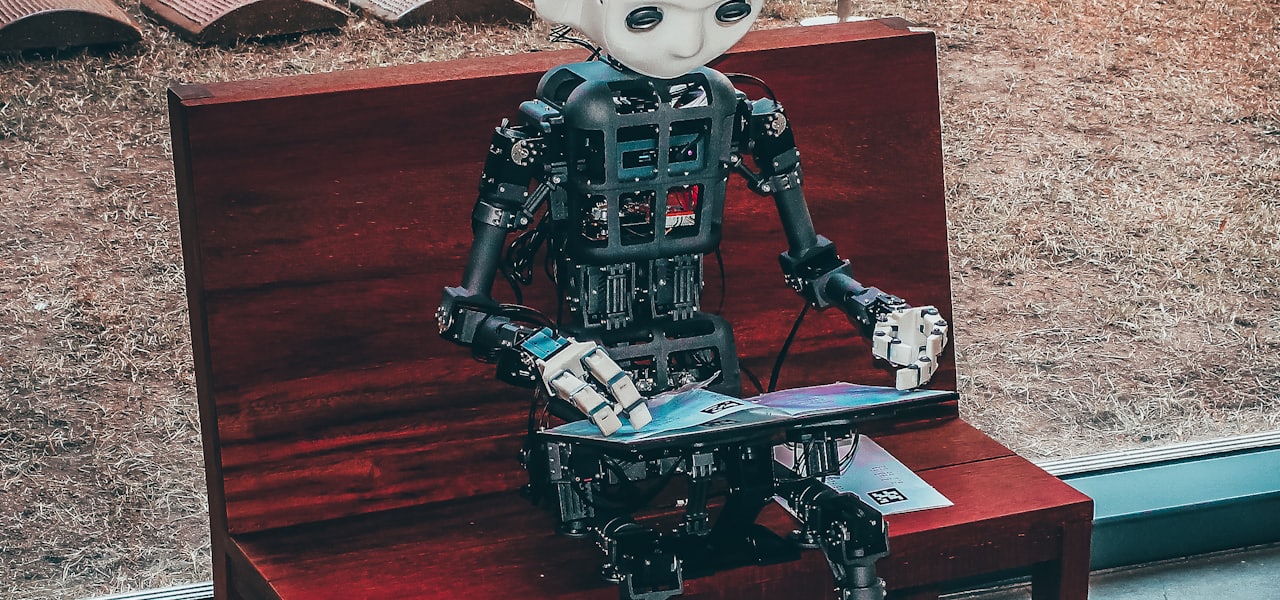
AI Face Gif

AI Face Gif — independent reviews, comparisons, pricing and step-by-step guides on Aizhi.

  • Action model learning

    Action model learning

    Action model learning (sometimes abbreviated action learning) is an area of machine learning concerned with the creation and modification of a software agent's knowledge about the effects and preconditions of the actions that can be executed within its environment. This knowledge is usually represented in a logic-based action description language and used as input for automated planners. Learning action models is important when goals change. When an agent acted for a while, it can use its accumulated knowledge about actions in the domain to make better decisions. Thus, learning action models differs from reinforcement learning. It enables reasoning about actions instead of expensive trials in the world. Action model learning is a form of inductive reasoning, where new knowledge is generated based on the agent's observations. The usual motivation for action model learning is the fact that manual specification of action models for planners is often a difficult, time-consuming, and error-prone task (especially in complex environments). == Action models == Given a training set E {\displaystyle E} consisting of examples e = ( s , a , s ′ ) {\displaystyle e=(s,a,s')} , where s , s ′ {\displaystyle s,s'} are observations of a world state from two consecutive time steps t , t ′ {\displaystyle t,t'} and a {\displaystyle a} is an action instance observed in time step t {\displaystyle t} , the goal of action model learning in general is to construct an action model ⟨ D , P ⟩ {\displaystyle \langle D,P\rangle } , where D {\displaystyle D} is a description of domain dynamics in action description formalism like STRIPS, ADL or PDDL and P {\displaystyle P} is a probability function defined over the elements of D {\displaystyle D} . However, many state of the art action learning methods assume determinism and do not induce P {\displaystyle P} . In addition to determinism, individual methods differ in how they deal with other attributes of domain (e.g. partial observability or sensoric noise). == Action learning methods == === State of the art === Recent action learning methods take various approaches and employ a wide variety of tools from different areas of artificial intelligence and computational logic. As an example of a method based on propositional logic, we can mention SLAF (Simultaneous Learning and Filtering) algorithm, which uses agent's observations to construct a long propositional formula over time and subsequently interprets it using a satisfiability (SAT) solver. Another technique, in which learning is converted into a satisfiability problem (weighted MAX-SAT in this case) and SAT solvers are used, is implemented in ARMS (Action-Relation Modeling System). Two mutually similar, fully declarative approaches to action learning were based on logic programming paradigm Answer Set Programming (ASP) and its extension, Reactive ASP. In another example, bottom-up inductive logic programming approach was employed. Several different solutions are not directly logic-based. For example, the action model learning using a perceptron algorithm or the multi level greedy search over the space of possible action models. In the older paper from 1992, the action model learning was studied as an extension of reinforcement learning. Nonetheless, further algorithms can be found that operate under different assumptions: FAMA can work even when some observations are missing, and it produces a general (lifted) planning model. It treats learning an action model like a planning problem, making sure the learned model matches the observations given. NOLAM can learn general action models even from noisy or imperfect data. LOCM focuses only on the order of actions in the data, ignoring any details about the states between those actions. The family of safe action model (SAM) learning methods create models that guarantee any plans made with them will actually work in the real world. There's also an extension called N-SAM that can learn action models with numeric conditions and effects. Additionally, numeric action models like N-SAM can be used to improve reinforcement learning (RL) performance through the RAMP algorithm. === Literature === Most action learning research papers are published in journals and conferences focused on artificial intelligence in general (e.g. Journal of Artificial Intelligence Research (JAIR), Artificial Intelligence, Applied Artificial Intelligence (AAI) or AAAI conferences). Despite mutual relevance of the topics, action model learning is usually not addressed in planning conferences like the International Conference on Automated Planning and Scheduling (ICAPS).

    Read more →
  • Time series

    Time series

    In mathematics, a time series is a sequence of data points indexed, listed, or graphed in chronological order. Most commonly, a time series consists of observations recorded at successive equally spaced points in time. Thus, it represents a form of discrete-time data. A time series may describe measurements collected over seconds, days, years, or even centuries. Common examples include heights of ocean tides, counts of sunspots, daily temperature readings, and the closing values of stock market indices such as the Dow Jones Industrial Average. A time series is often visualized using a run chart (a type of temporal line chart), which helps identify patterns such as trends, seasonal effects, and irregular fluctuations. Time series are widely used in statistics, actuarial science, signal processing, pattern recognition, econometrics, mathematical finance, weather forecasting, earthquake prediction, electroencephalography, control engineering, astronomy, communications engineering, and many other areas of applied science and engineering that involve temporal measurements. Time series analysis comprises methods for analyzing time series data in order to extract meaningful statistics and other characteristics of the data. Time series forecasting is the use of a model to predict future values based on previously observed values. Generally, time series data is modeled as a stochastic process. While regression analysis is often employed in such a way as to test relationships between one or more different time series, this type of analysis is not usually called "time series analysis", which refers in particular to relationships between different points in time within a single series. Time series data have a natural temporal ordering. This makes time series analysis distinct from cross-sectional studies, in which there is no natural ordering of the observations (e.g. explaining people's wages by reference to their respective education levels, where the individuals' data could be entered in any order). Time series analysis is also distinct from spatial data analysis where the observations typically relate to geographical locations (e.g. accounting for house prices by the location as well as the intrinsic characteristics of the houses). A stochastic model for a time series will generally reflect the fact that observations close together in time will be more closely related than observations further apart. In addition, time series models will often make use of the natural one-way ordering of time so that values for a given period will be expressed as deriving in some way from past values, rather than from future values (see time reversibility). Time series analysis can be applied to real-valued, continuous data, discrete numeric data, or discrete symbolic data (i.e. sequences of characters, such as letters and words in the English language). == Methods for analysis == Methods for time series analysis may be divided into two classes: frequency-domain methods and time-domain methods. The former include spectral analysis and wavelet analysis; the latter include auto-correlation and cross-correlation analysis. In the time domain, correlation and analysis can be made in a filter-like manner using scaled correlation, thereby mitigating the need to operate in the frequency domain. Additionally, time series analysis techniques may be divided into parametric and non-parametric methods. The parametric approaches assume that the underlying stationary stochastic process has a certain structure which can be described using a small number of parameters (for example, using an autoregressive or moving-average model). In these approaches, the task is to estimate the parameters of the model that describes the stochastic process. By contrast, non-parametric approaches explicitly estimate the covariance or the spectrum of the process without assuming that the process has any particular structure. Methods of time series analysis may also be divided into linear and non-linear, and univariate and multivariate. == Panel data == A time series is one type of panel data. Panel data is the general class, a multidimensional data set, whereas a time series data set is a one-dimensional panel (as is a cross-sectional dataset). A data set may exhibit characteristics of both panel data and time series data. One way to tell is to ask what makes one data record unique from the other records. If the answer is the time data field, then this is a time series data set candidate. If determining a unique record requires a time data field and an additional identifier which is unrelated to time (e.g. student ID, stock symbol, country code), then it is panel data candidate. If the differentiation lies on the non-time identifier, then the data set is a cross-sectional data set candidate. == Analysis == There are several types of motivation and data analysis available for time series which are appropriate for different purposes. === Motivation === In the context of statistics, econometrics, quantitative finance, seismology, meteorology, and geophysics the primary goal of time series analysis is forecasting. In the context of signal processing, control engineering and communication engineering it is used for signal detection. Other applications are in data mining, pattern recognition and machine learning, where time series analysis can be used for clustering, classification, query by content, anomaly detection as well as forecasting. === Exploratory analysis === A simple way to examine a regular time series is manually with a line chart. The datagraphic shows tuberculosis deaths in the United States, along with the yearly change and the percentage change from year to year. The total number of deaths declined in every year until the mid-1980s, after which there were occasional increases, often proportionately - but not absolutely - quite large. A study of corporate data analysts found two challenges to exploratory time series analysis: discovering the shape of interesting patterns, and finding an explanation for these patterns. Visual tools that represent time series data as heat map matrices can help overcome these challenges. === Estimation, filtering, and smoothing === This approach may be based on harmonic analysis and filtering of signals in the frequency domain using the Fourier transform, and spectral density estimation. Its development was significantly accelerated during World War II by mathematician Norbert Wiener, electrical engineers Rudolf E. Kálmán, Dennis Gabor and others for filtering signals from noise and predicting signal values at a certain point in time. An equivalent effect may be achieved in the time domain, as in a Kalman filter; see filtering and smoothing for more techniques. Other related techniques include: Autocorrelation analysis to examine serial dependence Spectral analysis to examine cyclic behavior which need not be related to seasonality. For example, sunspot activity varies over 11 year cycles. Other common examples include celestial phenomena, weather patterns, neural activity, commodity prices, and economic activity. Separation into components representing trend, seasonality, slow and fast variation, and cyclical irregularity: see trend estimation and decomposition of time series === Curve fitting === Curve fitting is the process of constructing a curve, or mathematical function, that has the best fit to a series of data points, possibly subject to constraints. Curve fitting can involve either interpolation, where an exact fit to the data is required, or smoothing, in which a "smooth" function is constructed that approximately fits the data. A related topic is regression analysis, which focuses more on questions of statistical inference such as how much uncertainty is present in a curve that is fit to data observed with random errors. Fitted curves can be used as an aid for data visualization, to infer values of a function where no data are available, and to summarize the relationships among two or more variables. Extrapolation refers to the use of a fitted curve beyond the range of the observed data, and is subject to a degree of uncertainty since it may reflect the method used to construct the curve as much as it reflects the observed data. For processes that are expected to generally grow in magnitude one of the curves in the graphic (and many others) can be fitted by estimating their parameters. The construction of economic time series involves the estimation of some components for some dates by interpolation between values ("benchmarks") for earlier and later dates. Interpolation is estimation of an unknown quantity between two known quantities (historical data), or drawing conclusions about missing information from the available information ("reading between the lines"). Interpolation is useful where the data surrounding the missing data is available and its trend, seasonality, and longer-term cycles are known. This is often done by using a relat

    Read more →
  • Lynda Soderholm

    Lynda Soderholm

    Lynda Soderholm is a physical chemist at the U.S. Department of Energy's (DOE) Argonne National Laboratory with a specialty in f-block elements. She is a senior scientist and the lead of the Actinide, Geochemistry & Separation Sciences Theme within Argonne's Chemical Sciences and Engineering Division. Her specific role is the Separation Science group leader within Heavy Element Chemistry and Separation Science (HESS), directing basic research focused on low-energy methods for isolating lanthanide and actinide elements from complex mixtures. She has made fundamental contributions to understanding f-block chemistry and characterizing f-block elements. Soderholm became a Fellow of the American Association for the Advancement of Science (AAAS) in 2013, and is also an Argonne Distinguished Fellow. == Early life and education == Soderholm was awarded her PhD in 1982 by McMaster University under the direction of Prof John Greedan. Her dissertation focused on characterizing the structural and magnetic properties of a series of ternary f-ion oxides. After graduating, she was awarded a NATO postdoctoral fellow at the Centre national de la recherche scientifique in France from 1982 until 1985. After a short postdoctoral appointment as an Argonne postdoctoral fellow she was promoted to staff scientist the same year. Over several years, she moved up the ranks, becoming a senior chemist in 2001. She was also an adjunct professor at the University of Notre Dame from 2003 until 2007. In 2021, Soderholm was appointed interim Division Director for the Chemical Sciences and Engineering Division. == Career and research == === Uncovering structure of Yttrium-123 Superconductor === Early in her career, Soderholm focused on the characterizing the magnetic and electronic behavior of compounds containing f-ions (lanthanides and actinides) with a focus on high-Tc materials, compounds that are superconducting under usually high temperatures. She was part of the research group that first determined the structure of YBa2Cu3O7. Their discovery formed the foundation for the further developments in the broad field of superconductivity. === Understanding f-ion speciation in solution === Continuing her interest in the f-elements, Soderholm shifted her focus from solid-state materials to nanoparticles and solutions, taking advantage of advances in X-ray structural probes made available by synchrotron facilities. Building on her earlier work using neutron scattering, her team became the first to discover that plutonium exists in solution as tiny, well-defined nanoparticles. This work solved a longstanding problem in understanding transport of plutonium in the environment and resulted in the development of a new, patented approach to separating plutonium during nuclear reprocessing. === Using machine learning to evaluate molecular structures === Soderholm's more recent projects use machine learning to understand the influence of complex molecular structuring in solutions, in connection with low-energy processes for separation of f-block elements from complex mixtures. == Awards and honors == University of Chicago Board of Governors' Distinguished Performance Award, 2009. Fellow of the American Association for the Advancement of Science, 2013. Argonne Distinguished Fellow, 2016 DOE materials sciences research competition for Outstanding Scientific Accomplishments in Solid State Physics, 1987. == Select publications == Beno, M. A.; Soderholm, L.; Capone, D. W., II; Hinks, D. G.; Jorgensen, J. D.; Grace, J. D.; Schuller, I. K.; Segre, C. U.; Zhang, K., Structure of the single-phase high-temperature superconductor yttrium barium copper oxide (YBa2Cu3O7−δ). Appl. Phys. Lett. 1987, 51 (1), 57–9. Soderholm, L.; Zhang, K.; Hinks, D. G.; Beno, M. A.; Jorgensen, J. D.; Segre, C. U.; Schuller, I. K., Incorporation of praseodymium in YBa2Cu3O7−δ: electronic effects on superconductivity. Nature (London) 1987, 328 (6131), 604–5. Antonio, M. R.; Williams, C. W.; Soderholm, L., Berkelium redox speciation. Radiochim. Acta 2002, 90 (12), 851–856. Soderholm, L.; Skanthakumar, S.; Neuefeind, J., Determination of actinide speciation in solution using high-energy X-ray scattering. Anal. Bioanal. Chem. 2005, 383 (1), 48–55. Forbes, T. Z.; Burns, P. C.; Skanthakumar, S.; Soderholm, L., Synthesis, structure, and magnetism of Np2O5. J. Am. Chem. Soc. 2007, 129 (10), 2760–2761. Soderholm, L.; Almond, P. M.; Skanthakumar, S.; Wilson, R. E.; Burns, P. C., The structure of the plutonium oxide nanocluster [Pu38O56Cl54(H2O)8]14-. Angew. Chem., Int. Ed. 2008, 47 (2), 298–302. Jensen, M. P.; Gorman-Lewis, D.; Aryal, B.; Paunesku, T.; Vogt, S.; Rickert, P. G.; Seifert, S.; Lai, B.; Woloschak, G. E.; Soderholm, L., An iron-dependent and transferrin-mediated cellular uptake pathway for plutonium. Nat. Chem. Biol. 2011, 7 (8), 560–565. Wilson, R. E.; Skanthakumar, S.; Soderholm, L., Separation of Plutonium Oxide Nanoparticles and Colloids. Angew. Chem., Int. Ed. 2011, 50 (47), 11234–11237. Knope, K. E.; Soderholm, L., Solution and solid-state structural chemistry of actinide hydrates and their hydrolysis and condensation products. Chem. Rev. 2013, 113 (2), 944–994. Luo, G.; Bu, W.; Mihaylov, M.; Kuzmenko, I.; Schlossman, M. L.; Soderholm, L., X-ray reflectivity reveals a nonmonotonic ion-density profile perpendicular to the surface of ErCl3 aqueous solutions. J. Phys. Chem. C 2013, 117 (37), 19082–19090. Jin, G. B.; Lin, J.; Estes, S. L.; Skanthakumar, S.; Soderholm, L., Influence of countercation hydration enthalpies on the formation of molecular complexes: A thorium-nitrate example. J. Am. Chem. Soc. 2017, 139 (49), 18003–18008. == Patents == Solvent extraction system for plutonium colloids and other oxide nano-particles, (2016).

    Read more →
  • Multi-task learning

    Multi-task learning

    Multi-task learning (MTL) is a subfield of machine learning in which multiple learning tasks are solved at the same time, while exploiting commonalities and differences across tasks. This can result in improved learning efficiency and prediction accuracy for the task-specific models, when compared to training the models separately. Inherently, Multi-task learning is a multi-objective optimization problem having trade-offs between different tasks. Early versions of MTL were called "hints". In a widely cited 1997 paper, Rich Caruana gave the following characterization:Multitask Learning is an approach to inductive transfer that improves generalization by using the domain information contained in the training signals of related tasks as an inductive bias. It does this by learning tasks in parallel while using a shared representation; what is learned for each task can help other tasks be learned better. In the classification context, MTL aims to improve the performance of multiple classification tasks by learning them jointly. One example is a spam-filter, which can be treated as distinct but related classification tasks across different users. To make this more concrete, consider that different people have different distributions of features which distinguish spam emails from legitimate ones, for example an English speaker may find that all emails in Russian are spam, not so for Russian speakers. Yet there is a definite commonality in this classification task across users, for example one common feature might be text related to money transfer. Solving each user's spam classification problem jointly via MTL can let the solutions inform each other and improve performance. Further examples of settings for MTL include multiclass classification and multi-label classification. Multi-task learning works because regularization induced by requiring an algorithm to perform well on a related task can be superior to regularization that prevents overfitting by penalizing all complexity uniformly. One situation where MTL may be particularly helpful is if the tasks share significant commonalities and are generally slightly under sampled. However, as discussed below, MTL has also been shown to be beneficial for learning unrelated tasks. == Methods == The key challenge in multi-task learning, is how to combine learning signals from multiple tasks into a single model. This may strongly depend on how well different task agree with each other, or contradict each other. There are several ways to address this challenge: === Task grouping and overlap === Within the MTL paradigm, information can be shared across some or all of the tasks. Depending on the structure of task relatedness, one may want to share information selectively across the tasks. For example, tasks may be grouped or exist in a hierarchy, or be related according to some general metric. Suppose, as developed more formally below, that the parameter vector modeling each task is a linear combination of some underlying basis. Similarity in terms of this basis can indicate the relatedness of the tasks. For example, with sparsity, overlap of nonzero coefficients across tasks indicates commonality. A task grouping then corresponds to those tasks lying in a subspace generated by some subset of basis elements, where tasks in different groups may be disjoint or overlap arbitrarily in terms of their bases. Task relatedness can be imposed a priori or learned from the data. Hierarchical task relatedness can also be exploited implicitly without assuming a priori knowledge or learning relations explicitly. For example, the explicit learning of sample relevance across tasks can be done to guarantee the effectiveness of joint learning across multiple domains. === Exploiting unrelated tasks: Auxiliary learning === In auxiliary learning, one attempts learning a group of principal tasks using a group of auxiliary tasks, unrelated to the principal ones. With the right unrelated tasks, joint learning of unrelated tasks which use the same input data have been shown to be beneficial, and provide significant improvement over standard MTL. The reason is that prior knowledge about task relatedness can lead to sparser and more informative representations for each task grouping, essentially by screening out idiosyncrasies of the data distribution. It has been proposed to build on a prior multitask methodology by favoring a shared low-dimensional representation within each task grouping, and imposing a penalty on tasks from different groups which encourages the two representations to be orthogonal. Learning with auxiliary unrelated tasks poses two major challenges: Finding useful auxiliary tasks and combining losses of all tasks in a useful way. Some methods can learn these from data together with the training process, and combine tasks efficiently. === Transfer of knowledge === Related to multi-task learning is the concept of knowledge transfer. Whereas traditional multi-task learning implies that a shared representation is developed concurrently across tasks, transfer of knowledge implies a sequentially shared representation. Large scale machine learning projects such as the deep convolutional neural network GoogLeNet, an image-based object classifier, can develop robust representations which may be useful to further algorithms learning related tasks. For example, the pre-trained model can be used as a feature extractor to perform pre-processing for another learning algorithm. Or the pre-trained model can be used to initialize a model with similar architecture which is then fine-tuned to learn a different classification task. === Multiple non-stationary tasks === Traditionally Multi-task learning and transfer of knowledge are applied to stationary learning settings. Their extension to non-stationary environments is termed Group online adaptive learning (GOAL). Sharing information could be particularly useful if learners operate in continuously changing environments, because a learner could benefit from previous experience of another learner to quickly adapt to their new environment. Such group-adaptive learning has numerous applications, from predicting financial time-series, through content recommendation systems, to visual understanding for adaptive autonomous agents. === Multi-task optimization === Multi-task optimization focuses on solving optimizing the whole process. The paradigm has been inspired by the well-established concepts of transfer learning and multi-task learning in predictive analytics. The key motivation behind multi-task optimization is that if optimization tasks are related to each other in terms of their optimal solutions or the general characteristics of their function landscapes, the search progress can be transferred to substantially accelerate the search on the other. The success of the paradigm is not necessarily limited to one-way knowledge transfers from simpler to more complex tasks. In practice an attempt is to intentionally solve a more difficult task that may unintentionally solve several smaller problems. There is a direct relationship between multitask optimization and multi-objective optimization. In some cases, the simultaneous training of seemingly related tasks may hinder performance compared to single-task models. Commonly, MTL models employ task-specific modules on top of a joint feature representation obtained using a shared module. Since this joint representation must capture useful features across all tasks, MTL may hinder individual task performance if the different tasks seek conflicting representation, i.e., the gradients of different tasks point to opposing directions or differ significantly in magnitude. This phenomenon is commonly referred to as negative transfer. To mitigate this issue, various MTL optimization methods have been proposed. It has been reported that meta-knowledge transfer could help avoid negative transfer.Besides, the per-task gradients are combined into a joint update direction through various aggregation algorithms or heuristics. There are several common approaches for multi-task optimization: Bayesian optimization, evolutionary computation, and approaches based on Game theory. ==== Multi-task Bayesian optimization ==== Multi-task Bayesian optimization is a modern model-based approach that leverages the concept of knowledge transfer to speed up the automatic hyperparameter optimization process of machine learning algorithms. The method builds a multi-task Gaussian process model on the data originating from different searches progressing in tandem. The captured inter-task dependencies are thereafter utilized to better inform the subsequent sampling of candidate solutions in respective search spaces. ==== Evolutionary multi-tasking ==== Evolutionary multi-tasking has been explored as a means of exploiting the implicit parallelism of population-based search algorithms to simultaneously progress multiple distinct optimization tasks. By mapping all task

    Read more →
  • List of 3D rendering software

    List of 3D rendering software

    3D rendering software products are the dedicated engines used for rendering computer-generated imagery. This is not the same as 3D modeling software, which involves the creation of 3D models, for which the software listed below can produce realistically rendered visualisations.General-purpose packages which can have their own built-in rendering capabilities are not listed here; these can be found in the list of 3D computer graphics software and list of 3D animation software. See 3D computer graphics software for more discussion about the distinctions.

    Read more →
  • Structural risk minimization

    Structural risk minimization

    Structural risk minimization (SRM) is an inductive principle of use in machine learning. Commonly in machine learning, a generalized model must be selected from a finite data set, with the consequent problem of overfitting – the model becoming too strongly tailored to the particularities of the training set and generalizing poorly to new data. The SRM principle addresses this problem by balancing the model's complexity against its success at fitting the training data. This principle was first set out in a 1974 book by Vladimir Vapnik and Alexey Chervonenkis and uses the VC dimension. In practical terms, Structural Risk Minimization is implemented by minimizing E t r a i n + β H ( W ) {\displaystyle E_{train}+\beta H(W)} , where E t r a i n {\displaystyle E_{train}} is the train error, the function H ( W ) {\displaystyle H(W)} is called a regularization function, and β {\displaystyle \beta } is a constant. H ( W ) {\displaystyle H(W)} is chosen such that it takes large values on parameters W {\displaystyle W} that belong to high-capacity subsets of the parameter space. Minimizing H ( W ) {\displaystyle H(W)} in effect limits the capacity of the accessible subsets of the parameter space, thereby controlling the trade-off between minimizing the training error and minimizing the expected gap between the training error and test error. The SRM problem can be formulated in terms of data. Given n data points consisting of data x and labels y, the objective J ( θ ) {\displaystyle J(\theta )} is often expressed in the following manner: J ( θ ) = 1 2 n ∑ i = 1 n ( h θ ( x i ) − y i ) 2 + λ 2 ∑ j = 1 d θ j 2 {\displaystyle J(\theta )={\frac {1}{2n}}\sum _{i=1}^{n}(h_{\theta }(x^{i})-y^{i})^{2}+{\frac {\lambda }{2}}\sum _{j=1}^{d}\theta _{j}^{2}} The first term is the mean squared error (MSE) term between the value of the learned model, h θ {\displaystyle h_{\theta }} , and the given labels y {\displaystyle y} . This term is the training error, E t r a i n {\displaystyle E_{train}} , that was discussed earlier. The second term, places a prior over the weights, to favor sparsity and penalize larger weights. The trade-off coefficient, λ {\displaystyle \lambda } , is a hyperparameter that places more or less importance on the regularization term. Larger λ {\displaystyle \lambda } encourages sparser weights at the expense of a more optimal MSE, and smaller λ {\displaystyle \lambda } relaxes regularization allowing the model to fit to data. Note that as λ → ∞ {\displaystyle \lambda \to \infty } the weights become zero, and as λ → 0 {\displaystyle \lambda \to 0} , the model typically suffers from overfitting.

    Read more →
  • Inductive bias

    Inductive bias

    The inductive bias (also known as learning bias) of a learning algorithm is the set of assumptions that the learner uses to predict outputs of given inputs that it has not encountered. Inductive bias is anything which makes the algorithm learn one pattern instead of another pattern (e.g., step-functions in decision trees instead of continuous functions in linear regression models). Learning involves searching a space of solutions for a solution that provides a good explanation of the data. However, in many cases, there may be multiple equally appropriate solutions. An inductive bias allows a learning algorithm to prioritize one solution (or interpretation) over another, independently of the observed data. In machine learning, the aim is to construct algorithms that are able to learn to predict a certain target output. To achieve this, the learning algorithm is presented some training examples that demonstrate the intended relation of input and output values. Then the learner is supposed to approximate the correct output, even for examples that have not been shown during training. Without any additional assumptions, this problem cannot be solved since unseen situations might have an arbitrary output value. The kind of necessary assumptions about the nature of the target function are subsumed in the phrase inductive bias. A classical example of an inductive bias is Occam's razor, assuming that the simplest consistent hypothesis about the target function is actually the best. Here, consistent means that the hypothesis of the learner yields correct outputs for all of the examples that have been given to the algorithm. Approaches to a more formal definition of inductive bias are based on mathematical logic. Here, the inductive bias is a logical formula that, together with the training data, logically entails the hypothesis generated by the learner. However, this strict formalism fails in many practical cases in which the inductive bias can only be given as a rough description (e.g., in the case of artificial neural networks), or not at all. == Types == The following is a list of common inductive biases in machine learning algorithms. Maximum conditional independence: if the hypothesis can be cast in a Bayesian framework, try to maximize conditional independence. This is the bias used in the Naive Bayes classifier. Minimum cross-validation error: when trying to choose among hypotheses, select the hypothesis with the lowest cross-validation error. Although cross-validation may seem to be free of bias, the "no free lunch" theorems show that cross-validation must be biased, for example assuming that there is no information encoded in the ordering of the data. Maximum margin: when drawing a boundary between two classes, attempt to maximize the width of the boundary. This is the bias used in support vector machines. The assumption is that distinct classes tend to be separated by wide boundaries. Minimum description length: when forming a hypothesis, attempt to minimize the length of the description of the hypothesis. Minimum features: unless there is good evidence that a feature is useful, it should be deleted. This is the assumption behind feature selection algorithms. Nearest neighbors: assume that most of the cases in a small neighborhood in feature space belong to the same class. Given a case for which the class is unknown, guess that it belongs to the same class as the majority in its immediate neighborhood. This is the bias used in the k-nearest neighbors algorithm. The assumption is that cases that are near each other tend to belong to the same class. == Shift of bias == Although most learning algorithms have a static bias, some algorithms are designed to shift their bias as they acquire more data. This does not avoid bias, since the bias shifting process itself must have a bias.

    Read more →
  • AZFinText

    AZFinText

    Arizona Financial Text System (AZFinText) is a textual-based quantitative financial prediction system written by Robert P. Schumaker of University of Texas at Tyler and Hsinchun Chen of the University of Arizona. == System == This system differs from other systems in that it uses financial text as one of its key means of predicting stock price movement. This reduces the information lag-time problem evident in many similar systems where new information must be transcribed (e.g., such as losing a costly court battle or having a product recall), before the quant can react appropriately. AZFinText overcomes these limitations by utilizing the terms used in financial news articles to predict future stock prices twenty minutes after the news article has been released. It is believed that certain article terms can move stocks more than others. Terms such as factory exploded or workers strike will have a depressing effect on stock prices whereas terms such as earnings rose will tend to increase stock prices. The AZFinText system analyzes financial news to identify the patterns in how investors react to such specific information. It uses methods like sentiment analysis and term weighting to examine the text of news articles. This system is designed to find price differences that occur when the market responds to news stories. This approach provides an alternative and easier method for predicting stock market movements. == Overview of research == The foundation of AZFinText can be found in the ACM TOIS article. Within this paper, the authors tested several different prediction models and linguistic textual representations. From this work, it was found that using the article terms and the price of the stock at the time the article was released was the most effective model and using proper nouns was the most effective textual representation technique. Combining the two, AZFinText netted a 2.84% trading return over the five-week study period. AZFinText was then extended to study what combination of peer organizations help to best train the system. Using the premise that IBM has more in common with Microsoft than GM, AZFinText studied the effect of varying peer-based training sets. To do this, AZFinText trained on the various levels of GICS and evaluated the results. It was found that sector-based training was most effective, netting an 8.50% trading return, outperforming Jim Cramer, Jim Jubak and DayTraders.com during the study period. AZFinText was also compared against the top 10 quantitative systems and outperformed 6 of them. A third study investigated the role of portfolio building in a textual financial prediction system. From this study, Momentum and Contrarian stock portfolios were created and tested. Using the premise that past winning stocks will continue to win and past losing stocks will continue to lose, AZFinText netted a 20.79% return during the study period. It was also noted that traders were generally overreacting to news events, creating the opportunity of abnormal returns. A fourth study looked into using author sentiment as an added predictive variable. Using the premise that an author can unwittingly influence market trades simply by the terms they use, AZFinText was tested using tone and polarity features. It was found that Contrarian activity was occurring within the market, where articles of a positive tone would decrease in price and articles of a negative tone would increase in price. A further study investigated what article verbs have the most influence on stock price movement. From this work, it was found that planted, announcing, front, smaller and crude had the highest positive impact on stock price. == Notable publicity == AZFinText has been the topic of discussion by numerous media outlets. Some of the more notable ones include The Wall Street Journal, MIT's Technology Review, Dow Jones Newswire, WBIR in Knoxville, TN, Slashdot and other media outlets.

    Read more →
  • Contrastive Language-Image Pre-training

    Contrastive Language-Image Pre-training

    Contrastive Language-Image Pre-training (CLIP) is a technique for training a pair of neural network models, one for image understanding and one for text understanding, using a contrastive objective. This method has enabled broad applications across multiple domains, including cross-modal retrieval, text-to-image generation, and aesthetic ranking. == Algorithm == The CLIP method trains a pair of models contrastively. One model takes in a piece of text as input and outputs a single vector representing its semantic content. The other model takes in an image and similarly outputs a single vector representing its visual content. The models are trained so that the vectors corresponding to semantically similar text-image pairs are close together in the shared vector space, while those corresponding to dissimilar pairs are far apart. To train a pair of CLIP models, one would start by preparing a large dataset of image-caption pairs. During training, the models are presented with batches of N {\displaystyle N} image-caption pairs. Let the outputs from the text and image models be respectively v 1 , . . . , v N , w 1 , . . . , w N {\displaystyle v_{1},...,v_{N},w_{1},...,w_{N}} . Two vectors are considered "similar" if their dot product is large. The loss incurred on this batch is the multi-class N-pair loss, which is a symmetric cross-entropy loss over similarity scores: − 1 N ∑ i ln ⁡ e v i ⋅ w i / T ∑ j e v i ⋅ w j / T − 1 N ∑ j ln ⁡ e v j ⋅ w j / T ∑ i e v i ⋅ w j / T {\displaystyle -{\frac {1}{N}}\sum _{i}\ln {\frac {e^{v_{i}\cdot w_{i}/T}}{\sum _{j}e^{v_{i}\cdot w_{j}/T}}}-{\frac {1}{N}}\sum _{j}\ln {\frac {e^{v_{j}\cdot w_{j}/T}}{\sum _{i}e^{v_{i}\cdot w_{j}/T}}}} In essence, this loss function encourages the dot product between matching image and text vectors ( v i ⋅ w i {\displaystyle v_{i}\cdot w_{i}} ) to be high, while discouraging high dot products between non-matching pairs. The parameter T > 0 {\displaystyle T>0} is the temperature, which is parameterized in the original CLIP model as T = e − τ {\displaystyle T=e^{-\tau }} where τ ∈ R {\displaystyle \tau \in \mathbb {R} } is a learned parameter. Other loss functions are possible. For example, Sigmoid CLIP (SigLIP) proposes the following loss function: L = 1 N ∑ i , j ∈ 1 : N f ( ( 2 δ i , j − 1 ) ( e τ w i ⋅ v j + b ) ) {\displaystyle L={\frac {1}{N}}\sum _{i,j\in 1:N}f((2\delta _{i,j}-1)(e^{\tau }w_{i}\cdot v_{j}+b))} where f ( x ) = ln ⁡ ( 1 + e − x ) {\displaystyle f(x)=\ln(1+e^{-x})} is the negative log sigmoid loss, and the Dirac delta symbol δ i , j {\displaystyle \delta _{i,j}} is 1 if i = j {\displaystyle i=j} else 0. == CLIP models == While the original model was developed by OpenAI, subsequent models have been trained by other organizations as well. === Image model === The image encoding models used in CLIP are typically vision transformers (ViT). The naming convention for these models often reflects the specific ViT architecture used. For instance, "ViT-L/14" means a "vision transformer large" (compared to other models in the same series) with a patch size of 14, meaning that the image is divided into 14-by-14 pixel patches before being processed by the transformer. The size indicator ranges from B, L, H, G (base, large, huge, giant), in that order. Other than ViT, the image model is typically a convolutional neural network, such as ResNet (in the original series by OpenAI), or ConvNeXt (in the OpenCLIP model series by LAION). Since the output vectors of the image model and the text model must have exactly the same length, both the image model and the text model have fixed-length vector outputs, which in the original report is called "embedding dimension". For example, in the original OpenAI model, the ResNet models have embedding dimensions ranging from 512 to 1024, and for the ViTs, from 512 to 768. Its implementation of ViT was the same as the original one, with one modification: after position embeddings are added to the initial patch embeddings, there is a LayerNorm. Its implementation of ResNet was the same as the original one, with 3 modifications: In the start of the CNN (the "stem"), they used three stacked 3x3 convolutions instead of a single 7x7 convolution, as suggested by. There is an average pooling of stride 2 at the start of each downsampling convolutional layer (they called it rect-2 blur pooling according to the terminology of ). This has the effect of blurring images before downsampling, for antialiasing. The final convolutional layer is followed by a multiheaded attention pooling. ALIGN a model with similar capabilities, trained by researchers from Google used EfficientNet, a kind of convolutional neural network. === Text model === The text encoding models used in CLIP are typically Transformers. In the original OpenAI report, they reported using a Transformer (63M-parameter, 12-layer, 512-wide, 8 attention heads) with lower-cased byte pair encoding (BPE) with 49152 vocabulary size. Context length was capped at 76 for efficiency. Like GPT, it was decoder-only, with only causally-masked self-attention. Its architecture is the same as GPT-2. Like BERT, the text sequence is bracketed by two special tokens [SOS] and [EOS] ("start of sequence" and "end of sequence"). Take the activations of the highest layer of the transformer on the [EOS], apply LayerNorm, then a final linear map. This is the text encoding of the input sequence. The final linear map has output dimension equal to the embedding dimension of whatever image encoder it is paired with. These models all had context length 77 and vocabulary size 49408. ALIGN used BERT of various sizes. == Dataset == === WebImageText === The CLIP models released by OpenAI were trained on a dataset called "WebImageText" (WIT) containing 400 million pairs of images and their corresponding captions scraped from the internet. The total number of words in this dataset is similar in scale to the WebText dataset used for training GPT-2, which contains about 40 gigabytes of text data. The dataset contains 500,000 text-queries, with up to 20,000 (image, text) pairs per query. The text-queries were generated by starting with all words occurring at least 100 times in English Wikipedia, then extended by bigrams with high mutual information, names of all Wikipedia articles above a certain search volume, and WordNet synsets. The dataset is private and has not been released to the public, and there is no further information on it. ==== Data preprocessing ==== For the CLIP image models, the input images are preprocessed by first dividing each of the R, G, B values of an image by the maximum possible value, so that these values fall between 0 and 1, then subtracting by [0.48145466, 0.4578275, 0.40821073], and dividing by [0.26862954, 0.26130258, 0.27577711]. The rationale was that these are the mean and standard deviations of the images in the WebImageText dataset, so this preprocessing step roughly whitens the image tensor. These numbers slightly differ from the standard preprocessing for ImageNet, which uses [0.485, 0.456, 0.406] and [0.229, 0.224, 0.225]. If the input image does not have the same resolution as the native resolution (224×224 for all except ViT-L/14@336px, which has 336×336 resolution), then the input image is first scaled by bicubic interpolation, so that its shorter side is the same as the native resolution, then the central square of the image is cropped out. === Others === ALIGN used over one billion image-text pairs, obtained by extracting images and their alt-tags from online crawling. The method was described as similar to how the Conceptual Captions dataset was constructed, but instead of complex filtering, they only applied a frequency-based filtering. Later models trained by other organizations had published datasets. For example, LAION trained OpenCLIP with published datasets LAION-400M, LAION-2B, and DataComp-1B. == Training == In the original OpenAI CLIP report, they reported training 5 ResNet and 3 ViT (ViT-B/32, ViT-B/16, ViT-L/14). Each was trained for 32 epochs. The largest ResNet model took 18 days to train on 592 V100 GPUs. The largest ViT model took 12 days on 256 V100 GPUs. All ViT models were trained on 224×224 image resolution. The ViT-L/14 was then boosted to 336×336 resolution by FixRes, resulting in a model. They found this was the best-performing model. In the OpenCLIP series, the ViT-L/14 model was trained on 384 A100 GPUs on the LAION-2B dataset, for 160 epochs for a total of 32B samples seen. == Applications == === Cross-modal retrieval === CLIP's cross-modal retrieval enables the alignment of visual and textual data in a shared latent space, allowing users to retrieve images based on text descriptions and vice versa, without the need for explicit image annotations. In text-to-image retrieval, users input descriptive text, and CLIP retrieves images with matching embeddings. In image-to-text retrieval, images are used to find related text content. CLIP’s ability to connect vis

    Read more →
  • Moral outsourcing

    Moral outsourcing

    Moral outsourcing is the placing of responsibility for ethical decision-making onto external entities, often algorithms. The term is often used in discussions of computer science and algorithmic fairness, but it can apply to any situation in which one appeals to outside agents in order to absolve themselves of responsibility for their actions. In this context, moral outsourcing specifically refers to the tendency of society to blame technology, rather than its creators or users, for any harm it may cause. == Definition == The term "moral outsourcing" was first coined by Dr. Rumman Chowdhury, a data scientist concerned with the overlap between artificial intelligence and social issues. Chowdhury used the term to describe looming fears of a so-called “Fourth Industrial Revolution” following the rise of artificial intelligence. Moral outsourcing is often applied by technologists to shrink away from their part in building offensive products. In her TED Talk, Chowdhury gives the example of a creator excusing their work by saying they were simply doing their job. This is a case of moral outsourcing and not taking ownership for the consequences of creation. When it comes to AI, moral outsourcing allows for creators to decide when the machine is human and when it is a computer - shifting the blame and responsibility of moral plights off of the technologists and onto the technology. Conversations around AI and bias and its impacts require accountability to bring change. It is difficult to address these biased systems if their creators use moral outsourcing to avoid taking any responsibility for the issue. One example of moral outsourcing is the anger that is directed at machines for “taking jobs away from humans” rather than companies for employing that technology and jeopardizing jobs in the first place. The term "moral outsourcing" refers to the concept of outsourcing, or enlisting an external operation to complete specific work for another organization. In the case of moral outsourcing, the work of resolving moral dilemmas or making choices according to an ethical code is supposed to be conducted by another entity. == Real-world applications == In the medical field, AI is increasingly involved in decision-making processes about which patients to treat, and how to treat them. The responsibility of the doctor to make informed decisions about what is best for their patients is outsourced to an algorithm. Sympathy is also noted to be an important part of medical practice; an aspect that artificial intelligence, glaringly, is missing. This form of moral outsourcing is a major concern in the medical community. Another field of technology in which moral outsourcing is frequently brought up is autonomous vehicles. California Polytechnic State University professor Keith Abney proposed an example scenario: "Suppose we have some [troublemaking] teenagers, and they see an autonomous vehicle, they drive right at it. They know the autonomous vehicle will swerve off the road and go off a cliff, but should it?" The decision of whether to sacrifice the autonomous vehicle (and any passengers inside) or the vehicle coming at it will be written into the algorithms defining the car's behavior. In the case of moral outsourcing, the responsibility of any damage caused by an accident may be attributed to the autonomous vehicle itself, rather than the creators who wrote the protocol the vehicle will use to "decide" what to do. Moral outsourcing is also used to delegate the consequences of predictive policing algorithms to technology, rather than the creators or the police. There are many ethical concerns with predictive policing due to the fact that it results in the over-policing of low income and minority communities. In the context of moral outsourcing, the positive feedback loop of sending disproportionate police forces into minority communities is attributed to the algorithm and the data being fed into this system--rather than the users and creators of the predictive policing technology. == Outside of technology == === Religion === Moral outsourcing is also commonly seen in appeals to religion to justify discrimination or harm. In his book What It Means to be Moral, sociologist Phil Zuckerman contradicts the popular religious notion that morality comes from God. Religion is oftentimes cited as a foundation for a moral stance without any tangible relation between the religious beliefs and personal stance. In these cases, religious individuals will "outsource" their personal beliefs and opinions by claiming that they are a result of their religious identification. This is seen where religion is cited as a factor for political beliefs, medical beliefs, and in extreme cases an excuse for violence. === Manufacturing === Moral outsourcing can also be seen in the business world in terms of manufacturing goods and avoiding environmental responsibility. Some companies in the United States will move their production process to foreign countries with more relaxed environmental policies to avoid the pollution laws that exist in the US. A study by the Harvard Business Review found that "in countries with tight environmental regulation, companies have 29% lower domestic emissions on average. On the other hand, such a tightening in regulation results in 43% higher emissions abroad." The consequences of higher pollution rates are then attributed to the loose regulations in these countries, rather than on the companies themselves who purposefully moved into these areas to avoid strict pollution policy.

    Read more →
  • Sample complexity

    Sample complexity

    The sample complexity of a machine learning algorithm represents the number of training-samples that it needs in order to successfully learn a target function. More precisely, the sample complexity is the number of training-samples that we need to supply to the algorithm, so that the function returned by the algorithm is within an arbitrarily small error of the best possible function, with probability arbitrarily close to 1. There are two variants of sample complexity: The weak variant fixes a particular input-output distribution; The strong variant takes the worst-case sample complexity over all input-output distributions. The No free lunch theorem, discussed below, proves that, in general, the strong sample complexity is infinite, i.e. that there is no algorithm that can learn the globally-optimal target function using a finite number of training samples. However, if we are only interested in a particular class of target functions (e.g., only linear functions) then the sample complexity is finite, and it depends linearly on the VC dimension on the class of target functions. == Definition == Let X {\displaystyle X} be a space which we call the input space, and Y {\displaystyle Y} be a space which we call the output space, and let Z {\displaystyle Z} denote the product X × Y {\displaystyle X\times Y} . For example, in the setting of binary classification, X {\displaystyle X} is typically a finite-dimensional vector space and Y {\displaystyle Y} is the set { − 1 , 1 } {\displaystyle \{-1,1\}} . Fix a hypothesis space H {\displaystyle {\mathcal {H}}} of functions h : X → Y {\displaystyle h\colon X\to Y} . A learning algorithm over H {\displaystyle {\mathcal {H}}} is a computable map from Z {\displaystyle Z} to H {\displaystyle {\mathcal {H}}} . In other words, it is an algorithm that takes as input a finite sequence of training samples and outputs a function from X {\displaystyle X} to Y {\displaystyle Y} . Typical learning algorithms include empirical risk minimization, without or with Tikhonov regularization. Fix a loss function L : Y × Y → R ≥ 0 {\displaystyle {\mathcal {L}}\colon Y\times Y\to \mathbb {R} _{\geq 0}} , for example, the square loss L ( y , y ′ ) = ( y − y ′ ) 2 {\displaystyle {\mathcal {L}}(y,y')=(y-y')^{2}} , where h ( x ) = y ′ {\displaystyle h(x)=y'} . For a given distribution ρ {\displaystyle \rho } on X × Y {\displaystyle X\times Y} , the expected risk of a hypothesis (a function) h ∈ H {\displaystyle h\in {\mathcal {H}}} is E ( h ) := E ρ [ L ( h ( x ) , y ) ] = ∫ X × Y L ( h ( x ) , y ) d ρ ( x , y ) {\displaystyle {\mathcal {E}}(h):=\mathbb {E} _{\rho }[{\mathcal {L}}(h(x),y)]=\int _{X\times Y}{\mathcal {L}}(h(x),y)\,d\rho (x,y)} In our setting, we have h = A ( S n ) {\displaystyle h={\mathcal {A}}(S_{n})} , where A {\displaystyle {\mathcal {A}}} is a learning algorithm and S n = ( ( x 1 , y 1 ) , … , ( x n , y n ) ) ∼ ρ n {\displaystyle S_{n}=((x_{1},y_{1}),\ldots ,(x_{n},y_{n}))\sim \rho ^{n}} is a sequence of vectors which are all drawn independently from ρ {\displaystyle \rho } . Define the optimal risk E H ∗ = inf h ∈ H E ( h ) . {\displaystyle {\mathcal {E}}_{\mathcal {H}}^{}={\underset {h\in {\mathcal {H}}}{\inf }}{\mathcal {E}}(h).} Set h n = A ( S n ) {\displaystyle h_{n}={\mathcal {A}}(S_{n})} , for each sample size n {\displaystyle n} . h n {\displaystyle h_{n}} is a random variable and depends on the random variable S n {\displaystyle S_{n}} , which is drawn from the distribution ρ n {\displaystyle \rho ^{n}} . The algorithm A {\displaystyle {\mathcal {A}}} is called consistent if E ( h n ) {\displaystyle {\mathcal {E}}(h_{n})} probabilistically converges to E H ∗ {\displaystyle {\mathcal {E}}_{\mathcal {H}}^{}} . In other words, for all ϵ , δ > 0 {\displaystyle \epsilon ,\delta >0} , there exists a positive integer N {\displaystyle N} , such that, for all sample sizes n ≥ N {\displaystyle n\geq N} , we have Pr ρ n [ E ( h n ) − E H ∗ ≥ ε ] < δ . {\displaystyle \Pr _{\rho ^{n}}[{\mathcal {E}}(h_{n})-{\mathcal {E}}_{\mathcal {H}}^{}\geq \varepsilon ]<\delta .} The sample complexity of A {\displaystyle {\mathcal {A}}} is then the minimum N {\displaystyle N} for which this holds, as a function of ρ , ϵ {\displaystyle \rho ,\epsilon } , and δ {\displaystyle \delta } . We write the sample complexity as N ( ρ , ϵ , δ ) {\displaystyle N(\rho ,\epsilon ,\delta )} to emphasize that this value of N {\displaystyle N} depends on ρ , ϵ {\displaystyle \rho ,\epsilon } , and δ {\displaystyle \delta } . If A {\displaystyle {\mathcal {A}}} is not consistent, then we set N ( ρ , ϵ , δ ) = ∞ {\displaystyle N(\rho ,\epsilon ,\delta )=\infty } . If there exists an algorithm for which N ( ρ , ϵ , δ ) {\displaystyle N(\rho ,\epsilon ,\delta )} is finite, then we say that the hypothesis space H {\displaystyle {\mathcal {H}}} is learnable. In others words, the sample complexity N ( ρ , ϵ , δ ) {\displaystyle N(\rho ,\epsilon ,\delta )} defines the rate of consistency of the algorithm: given a desired accuracy ϵ {\displaystyle \epsilon } and confidence δ {\displaystyle \delta } , one needs to sample N ( ρ , ϵ , δ ) {\displaystyle N(\rho ,\epsilon ,\delta )} data points to guarantee that the risk of the output function is within ϵ {\displaystyle \epsilon } of the best possible, with probability at least 1 − δ {\displaystyle 1-\delta } . In probably approximately correct (PAC) learning, one is concerned with whether the sample complexity is polynomial, that is, whether N ( ρ , ϵ , δ ) {\displaystyle N(\rho ,\epsilon ,\delta )} is bounded by a polynomial in 1 / ϵ {\displaystyle 1/\epsilon } and 1 / δ {\displaystyle 1/\delta } . If N ( ρ , ϵ , δ ) {\displaystyle N(\rho ,\epsilon ,\delta )} is polynomial for some learning algorithm, then one says that the hypothesis space H {\displaystyle {\mathcal {H}}} is PAC-learnable. This is a stronger notion than being learnable. == Unrestricted hypothesis space: infinite sample complexity == One can ask whether there exists a learning algorithm so that the sample complexity is finite in the strong sense, that is, there is a bound on the number of samples needed so that the algorithm can learn any distribution over the input-output space with a specified target error. More formally, one asks whether there exists a learning algorithm A {\displaystyle {\mathcal {A}}} , such that, for all ϵ , δ > 0 {\displaystyle \epsilon ,\delta >0} , there exists a positive integer N {\displaystyle N} such that for all n ≥ N {\displaystyle n\geq N} , we have sup ρ ( Pr ρ n [ E ( h n ) − E H ∗ ≥ ε ] ) < δ , {\displaystyle \sup _{\rho }\left(\Pr _{\rho ^{n}}[{\mathcal {E}}(h_{n})-{\mathcal {E}}_{\mathcal {H}}^{}\geq \varepsilon ]\right)<\delta ,} where h n = A ( S n ) {\displaystyle h_{n}={\mathcal {A}}(S_{n})} , with S n = ( ( x 1 , y 1 ) , … , ( x n , y n ) ) ∼ ρ n {\displaystyle S_{n}=((x_{1},y_{1}),\ldots ,(x_{n},y_{n}))\sim \rho ^{n}} as above. The No Free Lunch Theorem says that without restrictions on the hypothesis space H {\displaystyle {\mathcal {H}}} , this is not the case, i.e., there always exist "bad" distributions for which the sample complexity is arbitrarily large. Thus, in order to make statements about the rate of convergence of the quantity sup ρ ( Pr ρ n [ E ( h n ) − E H ∗ ≥ ε ] ) , {\displaystyle \sup _{\rho }\left(\Pr _{\rho ^{n}}[{\mathcal {E}}(h_{n})-{\mathcal {E}}_{\mathcal {H}}^{}\geq \varepsilon ]\right),} one must either constrain the space of probability distributions ρ {\displaystyle \rho } , e.g. via a parametric approach, or constrain the space of hypotheses H {\displaystyle {\mathcal {H}}} , as in distribution-free approaches. == Restricted hypothesis space: finite sample-complexity == The latter approach leads to concepts such as VC dimension and Rademacher complexity which control the complexity of the space H {\displaystyle {\mathcal {H}}} . A smaller hypothesis space introduces more bias into the inference process, meaning that E H ∗ {\displaystyle {\mathcal {E}}_{\mathcal {H}}^{}} may be greater than the best possible risk in a larger space. However, by restricting the complexity of the hypothesis space it becomes possible for an algorithm to produce more uniformly consistent functions. This trade-off leads to the concept of regularization. It is a theorem from VC theory that the following three statements are equivalent for a hypothesis space H {\displaystyle {\mathcal {H}}} : H {\displaystyle {\mathcal {H}}} is PAC-learnable. The VC dimension of H {\displaystyle {\mathcal {H}}} is finite. H {\displaystyle {\mathcal {H}}} is a uniform Glivenko-Cantelli class. This gives a way to prove that certain hypothesis spaces are PAC learnable, and by extension, learnable. === An example of a PAC-learnable hypothesis space === X = R d , Y = { − 1 , 1 } {\displaystyle X=\mathbb {R} ^{d},Y=\{-1,1\}} , and let H {\displaystyle {\mathcal {H}}} be the space of affine functions on X {\displaystyle X} , that is, functions of the form x ↦ ⟨ w , x ⟩ + b {\displaystyle x\mapsto \langl

    Read more →
  • Deep tomographic reconstruction

    Deep tomographic reconstruction

    Deep Tomographic Reconstruction is a set of methods for using deep learning methods to perform tomographic reconstruction of medical and industrial images. It uses artificial intelligence and machine learning, especially deep artificial neural networks or deep learning, to overcome challenges such as measurement noise, data sparsity, image artifacts, and computational inefficiency. This approach has been applied across various imaging modalities, including CT, MRI, PET, SPECT, ultrasound, and optical imaging == Historical background == Traditional tomographic reconstruction relies on analytic methods such as filtered back-projection, or iterative methods which incrementally compute inverse transformations from measurement data (e.g., Radon or Fourier transform data). However, these approaches are not sufficient for certain imaging techniques such as low-dose CT and fast MRI, or scenarios involving metal artifacts and patient motion. == Use in imaging modalities == === Computed tomography (CT) === In CT, deep learning models can be particularly effective in reducing radiation exposure while maintaining image quality. Deep neural networks can also be able to reconstruct images of fair quality from sparsely sampled data without sacrificing diagnostic performance. Deep learning-based generative AI models can reduce CT metal artifacts. === Magnetic resonance imaging (MRI) === In magnetic resonance imaging (MRI), deep learning can lead to reduced MRI motion artifacts, and increased acquisition speed, referred to as fast MRI. Despite suffering from disadvantages such as lower signal-to-noise ratio (SNR), deep learning can enhance image quality in low field MRI, making these systems clinically viable. === Positron emission tomography (PET) and single-photon emission CT (SPECT) === For PET imaging, deep learning models can provide substantial improvements in low-dose imaging and motion artifact correction. Also, deep learning can help SPECT for generation of attenuation background. A notable technique for PET denoising involves integrating MR data through multimodal networks, which use anatomical information from MRI to enhance PET image quality. === Ultrasound imaging === Deep learning can enhance ultrasound imaging by reducing speckle noise and motion blur. For ultrasound beamforming, deep neural networks can allow superior image quality with limited data at high speed. === Optical imaging and microscopy === Diffuse optical tomography, optical coherence tomography and microscopy can be improved by deep neural networks beyond traditional methods. Furthermore, deep learning can also enhance Photoacoustic imaging (see Deep learning in photoacoustic imaging), addressing challenges like high noise, low contrast, and limited resolution. Deep learning has also been applied to label-free live-cell imaging, where convolutional neural networks predict fluorescence labels from transmitted light images, a technique known as in silico labeling. This method can enable high-throughput, non-invasive cell analysis and phenotyping without the need for traditional fluorescent dyes.

    Read more →
  • VideoThang

    VideoThang

    VideoThang was free video editing software for Windows 2000, XP, and Vista. The software has three parts to it which are My Stuff, Edit My Stuff, and My Mix. The software accepts MOV, AVI, MPG, MP4, PNG, WMV, FLV, and MP3 standards. Its official website is now no longer available. == Reception == Jan Ozer, of Pcmag, said that the software "suffers from several unfortunate design and implementation flaws that dramatically limit output quality and overall utility." Jon L. Jacobi, of PC World, said that the software "may not be the most flexible multimedia editor in the world, but the trim/zoom basics are there, it's free, and it's so simple to use that just about anyone in the world should be able figure it out." Amit Agarwal, of Digital Inspiration, said that the software "doesn’t offer loads of features like other video editors but is perfect for making quick video slideshows of your pictures that you can upload on the web or share via email."

    Read more →
  • Cognitive philology

    Cognitive philology

    Cognitive philology is the science that studies written and oral texts as the product of human mental processes. Studies in cognitive philology compare documentary evidence emerging from textual investigations with results of experimental research, especially in the fields of cognitive and ecological psychology, neurosciences and artificial intelligence. "The point is not the text, but the mind that made it". Cognitive Philology aims to foster communication between literary, textual, philological disciplines on the one hand and researches across the whole range of the cognitive, evolutionary, ecological and human sciences on the other. Cognitive philology: investigates transmission of oral and written text, and categorization processes which lead to classification of knowledge, mostly relying on the information theory; studies how narratives emerge in so called natural conversation and selective process which lead to the rise of literary standards for storytelling, mostly relying on embodied semantics; explores the evolutive and evolutionary role played by rhythm and metre in human ontogenetic and phylogenetic development and the pertinence of the semantic association during processing of cognitive maps; Provides the scientific ground for multimedia critical editions of literary texts. Among the founding thinkers and noteworthy scholars devoted to such investigations are: Alan Richardson: Studies Theory of Mind in early-modern and contemporary literature. Anatole Pierre Fuksas Benoît de Cornulier David Herman: Professor of English at North Carolina State University and an adjunct professor of linguistics at Duke University. He is the author of "Universal Grammar and Narrative Form" and the editor of "Narratologies: New Perspectives on Narrative Analysis". Domenico Fiormonte François Recanati Gilles Fauconnier, a professor in Cognitive science at the University of California, San Diego. He was one of the founders of cognitive linguistics in the 1970s through his work on pragmatic scales and mental spaces. His research explores the areas of conceptual integration and compressions of conceptual mappings in terms of the emergent structure in language. Julián Santano Moreno Luca Nobile Manfred Jahn in Germany Mark Turner Paolo Canettieri

    Read more →
  • Matchbox Educable Noughts and Crosses Engine

    Matchbox Educable Noughts and Crosses Engine

    The Matchbox Educable Noughts and Crosses Engine (sometimes called the Machine Educable Noughts and Crosses Engine or MENACE) was a mechanical computer made from 304 matchboxes designed and built by artificial intelligence researcher Donald Michie and his colleague Roger Chambers, in 1961. It was designed to play human opponents in games of noughts and crosses (tic-tac-toe) by returning a move for any given state of play and to refine its strategy through reinforcement learning. This was one of the first types of artificial intelligence. Michie and Chambers did not have immediate access to a computer; they worked around this by building the engine out of matchboxes. The matchboxes they used each represented a single possible layout of a noughts and crosses grid. When the computer first played, it would randomly choose moves based on the current layout. As it played more games, through a reinforcement loop, it disqualified strategies that led to losing games, and supplemented strategies that led to winning games. Michie held a tournament against MENACE in 1961, wherein he experimented with different openings. Following MENACE's maiden tournament against Michie, it demonstrated successful artificial intelligence in its strategy. Michie's essays on MENACE's weight initialisation and the BOXES algorithm used by MENACE became popular in the field of computer science research. Michie was honoured for his contribution to machine learning research, and was twice commissioned to program a MENACE simulation on an actual computer. == Origin == Donald Michie (1923–2007) had been on the team decrypting the German Tunny Code during World War II. Fifteen years later, he wanted to further display his mathematical and computational prowess with an early convolutional neural network. Since computer equipment was not obtainable for such uses, and Michie did not have a computer readily available, he decided to display and demonstrate artificial intelligence in a more esoteric format and constructed a functional mechanical computer out of matchboxes and beads. MENACE was constructed as the result of a bet with a computer science colleague who postulated that such a machine was impossible. Michie undertook the task of collecting and defining each matchbox as a "fun project", later turned into a demonstration tool. Michie completed his essay on MENACE in 1963, "Experiments on the mechanization of game-learning", as well as his essay on the BOXES Algorithm, written with R. A. Chambers and had built up an AI research unit in Hope Park Square, Edinburgh, Scotland. MENACE learned by playing successive matches of noughts and crosses. Each time, it would eliminate a losing strategy by the human player confiscating the beads that corresponded to each move. It reinforced winning strategies by making the moves more likely, by supplying extra beads. This was one of the earliest versions of the Reinforcement Loop, the schematic algorithm of looping the algorithm, dropping unsuccessful strategies until only the winning ones remain. This model starts as completely random, and gradually learns. == Composition == MENACE was made from 304 matchboxes glued together in an arrangement similar to a chest of drawers. Each box had a code number, which was keyed into a chart. This chart had drawings of tic-tac-toe game grids with various configurations of X, O, and empty squares, corresponding to all possible permutations a game could go through as it progressed. After removing duplicate arrangements (ones that were simply rotations or mirror images of other configurations), MENACE used 304 permutations in its chart and thus that many matchboxes. Each individual matchbox tray contained a collection of coloured beads. Each colour represented a move on a square on the game grid, and so matchboxes with arrangements where positions on the grid were already taken would not have beads for that position. Additionally, at the front of the tray were two extra pieces of card in a "V" shape, the point of the "V" pointing at the front of the matchbox. Michie and his artificial intelligence team called MENACE's algorithm "Boxes", after the apparatus used for the machine. The first stage "Boxes" operated in five phases, each setting a definition and a precedent for the rules of the algorithm in relation to the game. == Operation == MENACE played first, as O, since all matchboxes represented permutations only relevant to the "X" player. To retrieve MENACE's choice of move, the opponent or operator located the matchbox that matched the current game state, or a rotation or mirror image of it. For example, at the start of a game, this would be the matchbox for an empty grid. The tray would be removed and lightly shaken so as to move the beads around. Then, the bead that had rolled into the point of the "V" shape at the front of the tray was the move MENACE had chosen to make. Its colour was then used as the position to play on, and, after accounting for any rotations or flips needed based on the chosen matchbox configuration's relation to the current grid, the O would be placed on that square. Then the player performed their move, the new state was located, a new move selected, and so on, until the game was finished. When the game had finished, the human player observed the game's outcome. As a game was played, each matchbox that was used for MENACE's turn had its tray returned to it ajar, and the bead used kept aside, so that MENACE's choice of moves and the game states they belonged to were recorded. Michie described his reinforcement system with "reward" and "punishment". Once the game was finished, if MENACE had won, it would then receive a "reward" for its victory. The removed beads showed the sequence of the winning moves. These were returned to their respective trays, easily identifiable since they were slightly open, as well as three bonus beads of the same colour. In this way, in future games MENACE would become more likely to repeat those winning moves, reinforcing winning strategies. If it lost, the removed beads were not returned, "punishing" MENACE, and meaning that in future it would be less likely, and eventually incapable if that colour of bead became absent, to repeat the moves that cause a loss. If the game was a draw, one additional bead was added to each box. == Results in practice == === Optimal strategy === Noughts and crosses has a well-known optimal strategy. A player must place their symbol in a way that blocks the other player from achieving any rows while simultaneously making a row themself. However, if both players use this strategy, the game always ends in a draw. If the human player is familiar with the optimal strategy, and MENACE can quickly learn it, then the games will eventually only end in draws. The likelihood of the computer winning increases quickly when the computer plays against a random-playing opponent. When playing against a player using optimal strategy, the odds of a draw grow to 100%. In Donald Michie's official tournament against MENACE in 1961 he used optimal strategy, and he and the computer began to draw consistently after twenty games. Michie's tournament had the following milestones: Michie began by consistently opening with "Variant 0", the middle square. At 15 games, MENACE abandoned all non-corner openings. At just over 20, Michie switched to consistently using "Variant 1", the bottom-right square. At 60, he returned to Variant 0. As he neared 80 games, he moved to "Variant 2", the top-middle. At 110, he switched to "Variant 3", the top right. At 135, he switched to "Variant 4", middle-right. At 190, he returned to Variant 1, and at 210, he returned to Variant 0. The trend in changes of beads in the "2" boxes runs: === Correlation === Depending on the strategy employed by the human player, MENACE produces a different trend on scatter graphs of wins. Using a random turn from the human player results in an almost-perfect positive trend. Playing the optimal strategy returns a slightly slower increase. The reinforcement does not create a perfect standard of wins; the algorithm will draw random uncertain conclusions each time. After the j-th round, the correlation of near-perfect play runs: 1 − D D − D ( j + 2 ) ∑ i = 0 j D ( j i + 1 ) V i {\displaystyle {1-D \over D-D^{(j+2)}}\sum _{i=0}^{j}D^{(ji+1)}V_{i}} Where Vi is the outcome (+1 is win, 0 is draw and -1 is loss) and D is the decay factor (average of past values of wins and losses). Below, Mn is the multiplier for the n-th round of the game. == Legacy == Donald Michie's MENACE proved that a computer could learn from failure and success to become good at a task. It used what would become core principles within the field of machine learning before they had been properly theorised. For example, the combination of how MENACE starts with equal numbers of types of beads in each matchbox, and how these are then selected at random, creates a learning behaviour similar to weight initialisation

    Read more →